

U.S. redeploys Patriot missiles from S. Korea without replacement forces
U.S. redeploys Patriot missiles from S. Korea without replacement forces
Posted April. 05, 2025 07:13,
Updated April. 05, 2025 07:13
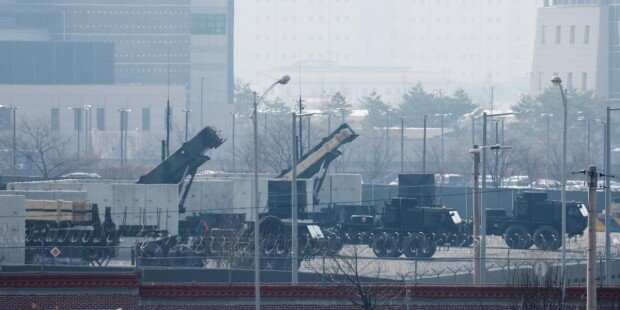
Regarding the recent relocation of two Patriot missile batteries—key air defense assets against North Korea—from South Korea to the Middle East, the U.S. Forces Korea (USFK) stated that it is a "temporarily rotational deployment" and that there is "no impact on the ROK-U.S. alliance or the defense posture of South Korea."
USFK currently operates eight Patriot missile batteries at major bases such as Pyeongtaek in Gyeonggi Province, Gunsan in North Jeolla Province, and Daegu. Typically, one Patriot battery consists of six to eight launchers, a fire control unit, and interceptor missiles.
This is not the first time USFK units have been dispatched to the Middle East. In 2008, one battalion of Apache attack helicopters was deployed to Afghanistan. At the time, an additional deployment of F-16 fighter jets to South Korea served as a "bridging capability" to minimize any power gap.
However, in the case of this recent Patriot battery movement, it appears that no replacement forces have been deployed. The Patriot missile batteries operated by USFK are core components of missile interception capability against North Korea, along with the THAAD system in Seongju, North Gyeongsang Province. While the U.S. mainland or U.S. Forces Japan have deployed additional Patriot units to the Korean Peninsula during periods of heightened tension from North Korean provocations, this is reportedly the first time that USFK's own Patriot units have been sent overseas.
Observers inside and outside the military suggest this could signal the start of more aggressive implementation of "strategic flexibility," including reductions or overseas deployments of USFK. In late December last year, just before the Trump administration took office, the Biden administration enacted the National Defense Authorization Act (NDAA), which maintained USFK levels at approximately 28,500 personnel. However, since the provisions of the NDAA are not legally binding, and with Republicans controlling both the House and Senate, there are concerns that the Trump administration could unilaterally pursue USFK reductions.
Sang-Ho Yun ysh1005@donga.com







 About Dong-A Ilbo