

N. Korean provocation by firing ballistic missiles during first ROK-US joint drill
N. Korean provocation by firing ballistic missiles during first ROK-US joint drill
Posted March. 11, 2025 07:39,
Updated March. 11, 2025 07:39
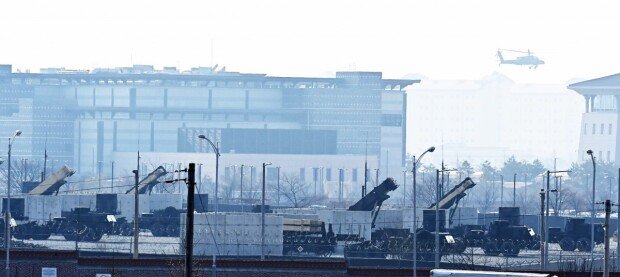
North Korea fired a ballistic missile into the West Sea on March 10, the same day the ROK-US Freedom Shield joint exercise was launched. This is North Korea’s first ballistic missile provocation since the Trump administration took office on January 20. Following the first public disclosure of the construction site of a “North Korean strategic nuclear submarine (SSBN)” on March 8 targeting the Trump administration, the recent action is interpreted as a threat to devastate South Korea with nuclear-armed missiles in protest of the FS joint exercise.
According to the Joint Chiefs of Staff, several ballistic missiles were launched into the West Sea from the Hwangju area of North Hwanghae Province at around 1:50 p.m. on March 10. This is the first time North Korea has fired a ballistic missile in two months since January 14. “It is presumed that they fired a short-range ballistic missile (CRBM) with a range of less than 300 km,” said a military source.
North Korea has conducted two test launches of strategic cruise missiles, the “North Korean version of the Tomahawk,” since the new U.S. government took office, while this was the first time launching a ballistic missile. Unlike cruise missiles, ballistic missile launches are a violation of UN Security Council resolutions.
North Korea’s CRBM, the Hwasong-11 Ra, is known to have a range of 110–300 kilometers. Its flight range is shorter than that of short-range ballistic missiles (SRBMs) such as the North Korean Iskander (KN-23), but it can carry tactical nuclear weapons and launch a large-scale surprise strike at low altitudes. “If North Korea launches a large number of Hwasong-31 tactical nuclear weapons loaded on CRBMs on the North Korean border, the presidential office, the Seoul government complex, and the Pyeongtaek U.S. military base, as well as the metropolitan area, could become concentrated nuclear strike targets,” a military source said.
North Korea previously announced that it held a ceremony to deliver 250 launchers of a new type of tactical ballistic missile, presumed to be the Hwasong-11Ra, to operational units in August of last year. Each of these missile launchers has four launch tubes, meaning if all 250 launchers are operational, they can launch 1,000 rounds at the same time.
The military is closely monitoring related trends, believing that North Korea will increase the level of provocation. Earlier, Kim Yo Jong, the younger sister of Chairman Kim Jong Un and vice department director of the Workers' Party, sharply criticized the deployment of U.S. strategic assets and joint exercises, threatening high-intensity provocations. "We are preparing for the possibility of a test launch of an intercontinental ballistic missile (SLBM) capable of hitting the U.S. mainland or a submarine-launched ballistic missile (SLBM) of the Pukguksong series that has never been launched before,” a military official said.
Sang-Ho Yun ysh1005@donga.com




![[단독]이승엽 “日 훈련량, 韓의 2배…기본기-진지함, 야구선진국의 비결”](https://dimg.donga.com/c/138/175/90/1/wps/NEWS/IMAGE/2026/06/21/134151471.1.jpg)



 About Dong-A Ilbo