

Research finds brain implant helps cure paraparesis
Research finds brain implant helps cure paraparesis
Posted November. 10, 2016 07:06,
Updated November. 10, 2016 07:18
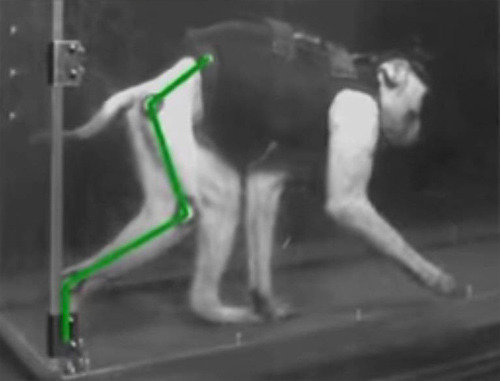
On Wednesday (local time), Professor Gregoire Courtine at the Swiss Federal Institute of Technology in Lausanne and his team published an article on the science journal Nature that the team succeeded in getting paraplegic monkeys get back on their feet by implanting an electrode which will replace the nerves in the brain and spinals of the monkey.
Professor Courtine focused on the point that the human nerve cell also sends and receives signals with weak bioelectricity. The team first implanted a small electrode inside the brains of two monkeys with impaired spinal nerves around the seventh thoracic vertebra, and then transmitted electric signals developed from these parts to the leg wirelessly with their exclusively developed device. The device was created to immediately send the signal ordered from the brain to the legs through electrodes implanted in the waist. Studies found that both monkeys recovered their normal walking skills.
In his research paper, Professor Courtine stated that the technologies applied in this research to interpret and transmit nerve signals can also be applied to treating paraplegic patients.
Until now, there were many preceding researches on efforts to treat paraplegic patients, but the recent discovery comes as the first full recovery. While the medical community is mostly concentrating on studying the “stem cell” treatment approach to recover the spinal nerves, no researcher succeeded in applying the relevant technology to primates until now.
"Though there were studies on transmitting brain signals with robot arms, the recent discovery was the first of its kind to connect the signals to the spinal cords near the legs,” Professor Kim Dae-soo of at the Korea Advanced Institute of Science and Technology (KAIST) explained. “The finding is indeed a remarkable outcome, as the team recovered the legs without even reviving the nerves.”
신수빈 sbshin@donga.com






 About Dong-A Ilbo