

Extreme heat demands stronger safeguards
Extreme heat demands stronger safeguards
Posted July. 13, 2026 08:38,
Updated July. 13, 2026 08:38
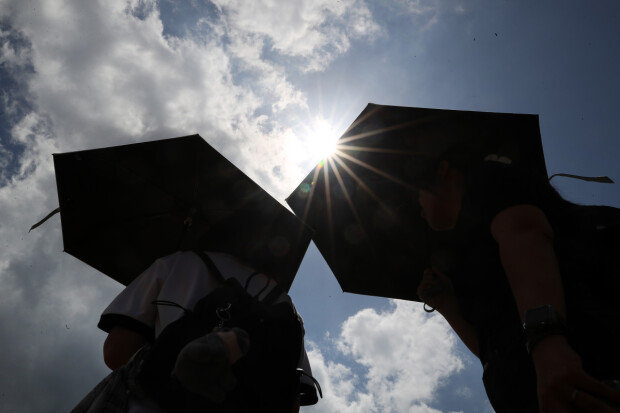
South Korea on Sunday issued its first Extreme Heat Emergency Warning for the southeastern cities of Gyeongsan and Pohang, underscoring how rapidly extreme heat is emerging as a major public safety threat. The Korea Meteorological Administration introduced the new alert system last month to warn of exceptionally dangerous conditions that could result in severe consequences, including heat-related deaths. The warning is issued when an area already under a heat wave warning records a heat index of at least 38 degrees Celsius or a high of 39 degrees Celsius or more for more than one day. Parts of Gyeongsan and Pohang approached 40 degrees Celsius on Saturday, well above the threshold.
When the Korea Meteorological Administration overhauled its heat advisory system for the first time in 18 years, it expected the new emergency heat warning would be issued only about once a decade. Simulations suggested it would have been triggered just 0.09 times a year between 2018 and 2025. Instead, it has already been issued before the peak of this summer's heat season. A combination of the Tibetan High and the North Pacific High has blanketed the Korean Peninsula, trapping hot, humid southwesterly air and fueling prolonged, oppressive heat.
The greater concern is that this is no longer a brief spell of extreme heat. As the climate warms, heat waves are becoming more frequent, more intense and longer-lasting. This year's super El Niño has driven record temperatures not only in South Korea but around the world. Europe has already found itself under an "omega heat dome," forcing landmarks such as the Eiffel Tower to shorten operating hours as heat-related deaths continue to climb. In the United States, the worst stretch of extreme heat since the 1950s has prompted heat alerts across nearly two-thirds of the country. Extreme heat is no longer simply a natural disaster. It has become a public safety threat that increasingly disrupts daily life.
Extreme heat is the deadliest of all natural disasters, claiming more lives than torrential rain, typhoons, high winds or heavy snowfall. The priority now is to limit the human toll through stronger safeguards. Last year, one in three heat-related illness patients worked in agriculture, forestry, fisheries or other outdoor jobs. Although the new emergency heat warning calls for outdoor work to be suspended, the measure remains voluntary, limiting its effectiveness. A more practical solution would be stricter enforcement of workplace safety rules, ensuring employers provide cooling equipment, adequate rest breaks and other protections against extreme heat. Authorities must also ensure that people living in cramped homes without adequate cooling are not left behind.








 About Dong-A Ilbo