

U.S., Iran trade fresh strikes over Hormuz
U.S., Iran trade fresh strikes over Hormuz
Posted July. 13, 2026 08:37,
Updated July. 13, 2026 08:37
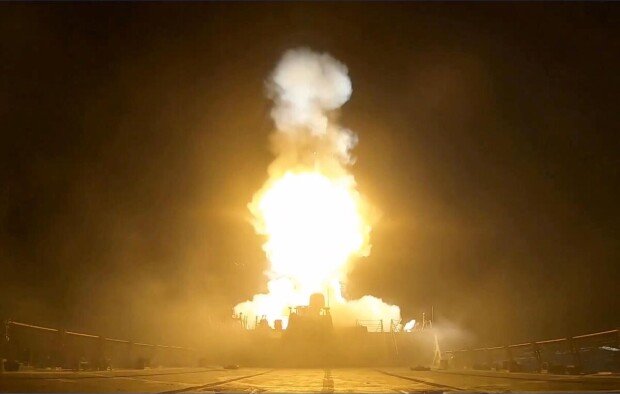
he United States and Iran traded airstrikes for the third time this week, deepening their confrontation over the Strait of Hormuz, the world's most critical oil shipping route. After U.S. President Donald Trump declared the ceasefire "over" Saturday, Iran attacked commercial vessels transiting the strait and announced it was reimposing a blockade. The United States responded Sunday with strikes on about 140 military targets in southern Iran. Tehran retaliated by targeting U.S. military bases in Kuwait, Bahrain, Qatar and Jordan.
The latest escalation has further dimmed prospects for renewed negotiations as Washington and Tehran vie for the upper hand in the Strait of Hormuz. Even so, both governments continue to explore diplomatic offramps behind closed doors, mindful of the costs of another full-scale war.
● Trump assassination intelligence heightens tensions
Iran's Islamic Revolutionary Guard Corps said Sunday it had fired warning shots at a commercial vessel traveling along what it described as an unauthorized shipping route and would keep the Strait of Hormuz closed until the United States ends its involvement there. U.S. Central Command said the vessel was disabled after a fire caused by the attack severely damaged its engine, adding that one crew member remains missing.
Within hours, U.S. Central Command announced strikes on about 140 Iranian military targets, including missile and drone bases, fighter aircraft, naval facilities, ammunition depots, communications sites and coastal surveillance installations. Reuters reported that the operation also reached Qeshm Island in the Strait of Hormuz, areas near Asaluyeh, home to Iran's largest oil refinery, sites near the commercial nuclear power plant in Bushehr and the port city of Bandar Abbas. The operation was broader than the previous two rounds of strikes carried out last week and extended to targets near oil and nuclear facilities, underscoring a sharper escalation in pressure on Tehran.
Iran responded almost immediately. State-run Press TV reported that Iranian forces struck U.S. military bases in Jordan, Kuwait, Bahrain and Qatar. The Revolutionary Guard said it destroyed a U.S. command-and-control center and an MQ-9 drone hangar at Prince Hassan Air Base in Jordan with missile strikes. It also claimed drone attacks hit a Patriot air defense battery, an ammunition depot and radar facilities at a U.S. base in Kuwait, while communications and radar installations used by the U.S. Navy's Fifth Fleet in Bahrain also came under attack. Press TV separately reported that Iranian forces disabled a second commercial vessel accused of violating transit rules in the Strait of Hormuz. The latest exchange followed earlier rounds of strikes on June 26 and July 8, despite the memorandum of understanding the two sides signed June 14 to end hostilities.
New reports of an alleged Iranian plot to assassinate Trump have added to the tensions. The Wall Street Journal reported that Israel recently passed intelligence to Washington indicating Tehran was planning to target the U.S. president. Trump wrote Friday on Truth Social that "1,000 missiles are locked and loaded" and aimed at Iran, warning that if Tehran assassinated him or even attempted to do so, "thousands more will be launched immediately."
Mojtaba Khamenei appeared to answer that warning a day later, saying that avenging his father, former Supreme Leader Ali Khamenei, "is the will of our people, and it will be carried out."
● Swiss talks could resume next week
Despite the sharp escalation, analysts say neither Washington nor Tehran appears ready to risk another full-scale war. Trump faces mounting political pressure to avoid another surge in oil prices ahead of November's midterm elections, while Iran's prolonged economic troubles have deepened during the conflict, limiting its capacity to sustain an extended military campaign.
Axios reported Friday that the two countries are working through mediators including Saudi Arabia, Qatar, Oman and Pakistan to contain the crisis, suggesting diplomatic channels remain active despite the fighting. Trump also spoke Saturday with Saudi Crown Prince Mohammed bin Salman. Iranian President Masoud Pezeshkian, a leading advocate of engagement within Iran's leadership, discussed ways to ease regional tensions during a phone call with Pakistani Prime Minister Shehbaz Sharif.
Axios also reported that another round of U.S.-Iran talks could be held in Switzerland next week. Iranian Foreign Minister Abbas Araghchi said Saturday that mutual compliance with the memorandum of understanding remained "the only solution," signaling Tehran's readiness to return to negotiations. Trump, despite declaring the ceasefire over, said he had agreed to Iran's request to resume talks.
Keun-Hyung Yoo noel@donga.com








 About Dong-A Ilbo