

TrueValue: "Building an AI-driven growth data infrastructure to digitize the growth journey"
TrueValue: "Building an AI-driven growth data infrastructure to digitize the growth journey"
Posted June. 05, 2026 14:00,
- TrueValue moves beyond grades by using AI to analyze a student's full growth process, including goals and behavioral patterns.
- Platforms DreamAppealand MMS (My Mission Studio) serve 870+ institutions, converting student actions into structured, AI-analyzable data.
- Leveraging its proprietary DreamAI, the company is evolving into a "talent agency," preparing to disrupt recruitment with deep-tech culture-fit analysis and global expansion.
TrueValue is building an AI growth data infrastructure that structures student growth processes into data. While the existing education system remains focused on grades and results, TrueValue records and analyzes the entire growth process, including an individual's goals, behaviors, interactions, context, and time. Based on this, it operates the student growth behavior platform DreamAppeal and the teacher solution My Mission Studio (MMS), providing services to around 870 schools and educational institutions nationwide.
Jooyoung Joung, CEO of TrueValue, introduces TrueValue not merely as an edutech company, but as an AI-based data infrastructure firm. He explains that by focusing on the process rather than the result, they are redesigning the existing growth data infrastructure to contribute to not just education, but the entire growth trajectory, including goal setting, achievement, and employment.
I met with CEO Jooyoung Joung to discuss TrueValue and its AI growth data infrastructure.

Improving the result-oriented education structure to start a business
Could you please introduce yourself?
I graduated from the Korea Science Academy Of KAIST (KSA) and majored in Industrial and Systems Engineering and Management Science at KAIST. Afterward, I served as an IT officer in the Navy, gaining experience in how data and systems are utilized in the field, and I founded TrueValue in January 2019. Preparation for the startup began 7–8 years prior. I designed the business structure and refined my ideas by testing them on students and university clubs around me. Choosing my major was also with entrepreneurship in mind. I chose Industrial and Systems Engineering to contemplate business structure design and Management Science to enhance business viability.
What was the motive behind starting TrueValue?
The starting point was a critical awareness of the educational structure. Many teenagers struggle amidst competition focused on grades and results. In severe cases, some even take their own lives. Various support policies such as counseling and mentoring have been expanded to solve this, but there has been little improvement. This is because it is a problem of a social structure that evaluates based on results, not an individual's problem. Therefore, during the Roh Moo-hyun administration, I participated in the Youth Special Committee to debate and urge policy changes. However, reality did not change. Instead of waiting for policy changes, I decided to start a business with the thought that I must create a structure that people like and can use directly.
What do you mean by a problem of social structure?
The current education system evaluates students based on results. It fails to sufficiently reflect information about which direction an individual wants to grow and what processes they have gone through. Students find it difficult to feel their own growth and lack the means to explain themselves outside of grades or results.
The biggest problem is that data on career-related activities is neither accumulated nor utilized anywhere. No matter how many career education sessions are increased, they end up as one-off experiences, and the system returns to grade-oriented education. Even with increased mentoring and more career information, students feel they lack opportunities to communicate sincerely about their dreams.
As AI develops, services supporting student growth are emerging, but if the data the AI learns is limited to grade changes, proper analysis cannot take place. It only tells them how to raise their grades. This problem extends to the job market. Companies want data other than academic background or grades, but there is virtually no data to replace these.
To solve this, TrueValue is creating a structure where individuals can continuously recognize their desired growth direction and record their corresponding behaviors and processes, leading to customized support and opportunities.

An AI growth data infrastructure company structuring the student growth process
What kind of company is TrueValue?
TrueValue builds an AI growth data infrastructure that structures human growth processes. It creates a structure to record and understand data on what direction an individual aimed to grow in, what actions they took in that process, and what interactions they went through. While existing systems record only result-oriented information, TrueValue digitizes the growth process based on elements such as goals, behaviors, interactions, context, and time.
TrueValue has developed its AI growth data infrastructure with the mission of "removing barriers for everyone who dreams (barrier-free)" and the vision of "we will nurture all the talents in the world." Previously, there was no concept to define TrueValue's service, so it was often classified as an edutech company. However, it is now clearly defined as an AI growth data infrastructure company.
What is AI growth data infrastructure?
AI growth data infrastructure is an infrastructure that structures data generated from students' daily lives, learning, and career activities, and creates a foundation for AI to understand individual growth patterns based on this. It includes not just accumulating a lot of data, but also structuring data, analyzing behavioral patterns, and continuously upgrading by applying AI models suited to the environment of each school.
DreamAppeal and MMS supporting student growth
Could you explain your flagship solution, DreamAppeal?
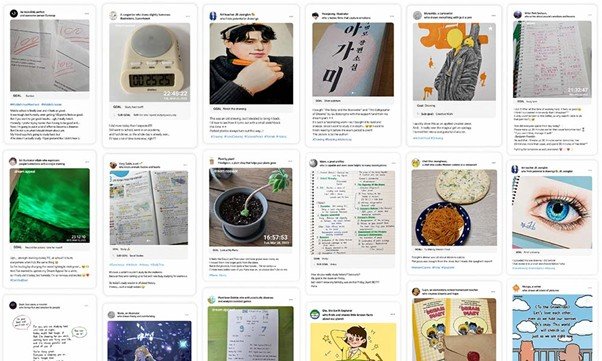
DreamAppeal is a growth behavior platform where students set their own goals and record action items. The key is that it accumulates voluntary behavioral data from students, not external evaluation data. Users name their own dreams and post about the process of finding their dreams, their concerns, and the process of practicing toward their goals. Users cheer and advise each other. The records accumulated in the process are called 'DreamLog'. In other words, DreamLog is a record of an individual's values, goals, concerns, practice history, and help received, organized chronologically. This is the core foundation for AI growth analysis, which connects customized information and opportunities to individuals.
It also applies a point system called 'Stardust'. Stardust is divided into 'Dream Dust', which accumulates as I practice, and 'Cheer Dust', which accumulates when I cheer for someone. Dream Dust can be used for oneself within the app, while Cheer Dust can only be used to gift to others. This naturally created a culture where people cheer for each other and points accumulate. Points accumulated this way can be converted into cash, and for this purpose, a partnership was signed with Hana Bank in October 2025. DreamAppeal released its official version in 2023 and is available in web and mobile versions.
How is the actual user response?
It is rapidly establishing itself with positive responses from students. There are over 81,000 users, and the cumulative number of cheers is over 8 million. More than 450,000 behavioral data points have been accumulated, and it is being used in over 870 schools and educational institutions nationwide. Compared to before use, the number of targets for dream communication increased by an average of 33 times, and communication frequency increased by 256 times.
There are also success stories. A student preparing to be a YouTuber grew enough to receive corporate advertising sponsorships. For a student whose dream is to be a dancer, we connected 8 staff members, including filming, hair, makeup, and costumes, to support them in taking a professional dance profile video. The student appeared in 2 TV commercials and was selected as a main dancer for a large dance team. A student who dreamed of becoming a ramen researcher recorded over 2,000 practices, and based on this, became a mentee of a ramen development researcher at a food research institute. They also produced a professional baseball player in the KBO 2025 rookie draft. Seeing the student practicing over 1,400 times since their first year of middle school using DreamAppeal, we supported them with baseballs, speed guns, and other equipment, and the student was drafted.
Thanks to such results, schools are also interested. It is useful for motivating students and managing their career paths. Therefore, we developed a curriculum to learn self-directed career management habits using DreamAppeal and provided it to schools. The curriculum is officially registered with the Ministry of Education, and through this, we also received the Minister of Education Award. We are currently collaborating with the Incheon Metropolitan City Office of Education and the Gimcheon Office of Education, and are discussing collaborations with other regional education offices.
You have recently introduced My Mission Studio (MMS). What kind of solution is it?
Many teachers who encountered DreamAppeal requested to use it in schools as well. They want to assign missions to students and cheer them on. Thus, we developed MMS, a solution that teachers can participate in. MMS is a solution designed for schools to structure and manage students' daily life and activity data, acting as a role that converts data generated in the field into usable data structures, not just simple records
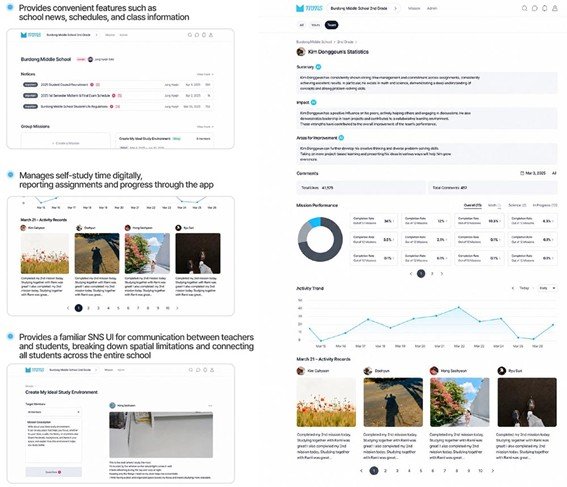
The basic structure is similar to DreamAppeal. Teachers can assign missions to students according to a pre-defined curriculum and cheer or give advice. In addition, teacher management functions such as student counseling management, AI-based practice pattern and change statistical analysis, and automatic organization of school records have been added. Teachers can develop their own curriculum or purchase and use popular curricula from the market. In particular, since the student is the subject of the record, the teacher does not need to observe and input student activities one by one. Teachers can focus on customized support based on the analysis results. Thanks to these advantages, it can be used in various ways such as club guidance, after-school programs, and personalized career courses.
MMS released a test version in October last year, reflected actual teacher feedback to upgrade it, and introduced the official version in May this year. To alleviate anxiety about personal information leakage and misuse of students, MMS supports both a subscription-based Software as a Service (SaaS) method and an on-premise method where the server is located at the school. If the on-premise method is chosen, student data can be managed without worrying about data leakage.
Could you also explain the proprietary AI model?
TrueValue has also developed an AI model called 'DreamAI' that understands individual growth best by learning data such as values, goals, practice details, concerns, and help received that users voluntarily updated. DreamAI is an AI model that understands my growth better than any other AI. Also, the more it is used repeatedly, the more it develops into a personalized AI. According to test results requested from two external organizations, its ability to write and summarize individual career activity portfolios was found to be higher than that of general Large Language Models (LLMs). As more data accumulates in the future, it is expected to become a much more accurate AI model.
Expanding to recruitment solutions, preparing for global expansion into Japan and the US
What are your future plans and goals?
We plan to expand the application of solutions like DreamAppeal and MMS to the school level and proceed with the upgrading of the AI model in parallel. We are also preparing a market service for DreamAppeal where users can sell self-made clothes, character merchandise, poetry books, novels, etc., and plan to apply it in the second half of this year. In the future, we plan to expand it into a recruitment solution. Existing recruitment platforms show data of entry-level employees only through academic background, grades, and career. TrueValue possesses data such as changes in values, dreams, and practice details from adolescence, so it can analyze not only sincerity but also how well they fit into the corporate culture (culture fit). It is expected that more accurate talent evaluation will be possible than existing resumes.
Global expansion is also being prepared. Japan and India have similar education and economic environments to Korea, so the problems students face are similar. The US and Europe have high educational freedom, so demand for TrueValue's solutions is expected to be high. While promoting expansion into Japan, we plan to prepare for expansion into the US simultaneously.
TrueValue's solution understands better than any other AI what kind of person an individual wants to grow into. Based on this, we aim to be a company that grows with all talents in the world and acts as a "talent agency" for all talents. Ultimately, the goal is to grow into a deep-tech company representing the AI growth data infrastructure field.
By Man-hyuk Han (mh@itdonga.com)
- Platforms DreamAppealand MMS (My Mission Studio) serve 870+ institutions, converting student actions into structured, AI-analyzable data.
- Leveraging its proprietary DreamAI, the company is evolving into a "talent agency," preparing to disrupt recruitment with deep-tech culture-fit analysis and global expansion.
TrueValue is building an AI growth data infrastructure that structures student growth processes into data. While the existing education system remains focused on grades and results, TrueValue records and analyzes the entire growth process, including an individual's goals, behaviors, interactions, context, and time. Based on this, it operates the student growth behavior platform DreamAppeal and the teacher solution My Mission Studio (MMS), providing services to around 870 schools and educational institutions nationwide.
Jooyoung Joung, CEO of TrueValue, introduces TrueValue not merely as an edutech company, but as an AI-based data infrastructure firm. He explains that by focusing on the process rather than the result, they are redesigning the existing growth data infrastructure to contribute to not just education, but the entire growth trajectory, including goal setting, achievement, and employment.
I met with CEO Jooyoung Joung to discuss TrueValue and its AI growth data infrastructure.
Jooyoung Joung, CEO of TrueValue / Source = IT DongA
Improving the result-oriented education structure to start a business
Could you please introduce yourself?
I graduated from the Korea Science Academy Of KAIST (KSA) and majored in Industrial and Systems Engineering and Management Science at KAIST. Afterward, I served as an IT officer in the Navy, gaining experience in how data and systems are utilized in the field, and I founded TrueValue in January 2019. Preparation for the startup began 7–8 years prior. I designed the business structure and refined my ideas by testing them on students and university clubs around me. Choosing my major was also with entrepreneurship in mind. I chose Industrial and Systems Engineering to contemplate business structure design and Management Science to enhance business viability.
What was the motive behind starting TrueValue?
The starting point was a critical awareness of the educational structure. Many teenagers struggle amidst competition focused on grades and results. In severe cases, some even take their own lives. Various support policies such as counseling and mentoring have been expanded to solve this, but there has been little improvement. This is because it is a problem of a social structure that evaluates based on results, not an individual's problem. Therefore, during the Roh Moo-hyun administration, I participated in the Youth Special Committee to debate and urge policy changes. However, reality did not change. Instead of waiting for policy changes, I decided to start a business with the thought that I must create a structure that people like and can use directly.
What do you mean by a problem of social structure?
The current education system evaluates students based on results. It fails to sufficiently reflect information about which direction an individual wants to grow and what processes they have gone through. Students find it difficult to feel their own growth and lack the means to explain themselves outside of grades or results.
The biggest problem is that data on career-related activities is neither accumulated nor utilized anywhere. No matter how many career education sessions are increased, they end up as one-off experiences, and the system returns to grade-oriented education. Even with increased mentoring and more career information, students feel they lack opportunities to communicate sincerely about their dreams.
As AI develops, services supporting student growth are emerging, but if the data the AI learns is limited to grade changes, proper analysis cannot take place. It only tells them how to raise their grades. This problem extends to the job market. Companies want data other than academic background or grades, but there is virtually no data to replace these.
To solve this, TrueValue is creating a structure where individuals can continuously recognize their desired growth direction and record their corresponding behaviors and processes, leading to customized support and opportunities.
TrueValue’s DreamAppeal / Source = TrueValue
An AI growth data infrastructure company structuring the student growth process
What kind of company is TrueValue?
TrueValue builds an AI growth data infrastructure that structures human growth processes. It creates a structure to record and understand data on what direction an individual aimed to grow in, what actions they took in that process, and what interactions they went through. While existing systems record only result-oriented information, TrueValue digitizes the growth process based on elements such as goals, behaviors, interactions, context, and time.
TrueValue has developed its AI growth data infrastructure with the mission of "removing barriers for everyone who dreams (barrier-free)" and the vision of "we will nurture all the talents in the world." Previously, there was no concept to define TrueValue's service, so it was often classified as an edutech company. However, it is now clearly defined as an AI growth data infrastructure company.
What is AI growth data infrastructure?
AI growth data infrastructure is an infrastructure that structures data generated from students' daily lives, learning, and career activities, and creates a foundation for AI to understand individual growth patterns based on this. It includes not just accumulating a lot of data, but also structuring data, analyzing behavioral patterns, and continuously upgrading by applying AI models suited to the environment of each school.
DreamAppeal and MMS supporting student growth
Could you explain your flagship solution, DreamAppeal?
DreamAppeal is a growth behavior platform where students set their own goals and record action items. The key is that it accumulates voluntary behavioral data from students, not external evaluation data. Users name their own dreams and post about the process of finding their dreams, their concerns, and the process of practicing toward their goals. Users cheer and advise each other. The records accumulated in the process are called 'DreamLog'. In other words, DreamLog is a record of an individual's values, goals, concerns, practice history, and help received, organized chronologically. This is the core foundation for AI growth analysis, which connects customized information and opportunities to individuals.
It also applies a point system called 'Stardust'. Stardust is divided into 'Dream Dust', which accumulates as I practice, and 'Cheer Dust', which accumulates when I cheer for someone. Dream Dust can be used for oneself within the app, while Cheer Dust can only be used to gift to others. This naturally created a culture where people cheer for each other and points accumulate. Points accumulated this way can be converted into cash, and for this purpose, a partnership was signed with Hana Bank in October 2025. DreamAppeal released its official version in 2023 and is available in web and mobile versions.
DreamAppeal user’s post / Source = TrueValue
How is the actual user response?
It is rapidly establishing itself with positive responses from students. There are over 81,000 users, and the cumulative number of cheers is over 8 million. More than 450,000 behavioral data points have been accumulated, and it is being used in over 870 schools and educational institutions nationwide. Compared to before use, the number of targets for dream communication increased by an average of 33 times, and communication frequency increased by 256 times.
There are also success stories. A student preparing to be a YouTuber grew enough to receive corporate advertising sponsorships. For a student whose dream is to be a dancer, we connected 8 staff members, including filming, hair, makeup, and costumes, to support them in taking a professional dance profile video. The student appeared in 2 TV commercials and was selected as a main dancer for a large dance team. A student who dreamed of becoming a ramen researcher recorded over 2,000 practices, and based on this, became a mentee of a ramen development researcher at a food research institute. They also produced a professional baseball player in the KBO 2025 rookie draft. Seeing the student practicing over 1,400 times since their first year of middle school using DreamAppeal, we supported them with baseballs, speed guns, and other equipment, and the student was drafted.
Thanks to such results, schools are also interested. It is useful for motivating students and managing their career paths. Therefore, we developed a curriculum to learn self-directed career management habits using DreamAppeal and provided it to schools. The curriculum is officially registered with the Ministry of Education, and through this, we also received the Minister of Education Award. We are currently collaborating with the Incheon Metropolitan City Office of Education and the Gimcheon Office of Education, and are discussing collaborations with other regional education offices.
You have recently introduced My Mission Studio (MMS). What kind of solution is it?
Many teachers who encountered DreamAppeal requested to use it in schools as well. They want to assign missions to students and cheer them on. Thus, we developed MMS, a solution that teachers can participate in. MMS is a solution designed for schools to structure and manage students' daily life and activity data, acting as a role that converts data generated in the field into usable data structures, not just simple records
My Mission Studio’s (MMS) main features / Source = TrueValue
The basic structure is similar to DreamAppeal. Teachers can assign missions to students according to a pre-defined curriculum and cheer or give advice. In addition, teacher management functions such as student counseling management, AI-based practice pattern and change statistical analysis, and automatic organization of school records have been added. Teachers can develop their own curriculum or purchase and use popular curricula from the market. In particular, since the student is the subject of the record, the teacher does not need to observe and input student activities one by one. Teachers can focus on customized support based on the analysis results. Thanks to these advantages, it can be used in various ways such as club guidance, after-school programs, and personalized career courses.
MMS released a test version in October last year, reflected actual teacher feedback to upgrade it, and introduced the official version in May this year. To alleviate anxiety about personal information leakage and misuse of students, MMS supports both a subscription-based Software as a Service (SaaS) method and an on-premise method where the server is located at the school. If the on-premise method is chosen, student data can be managed without worrying about data leakage.
Could you also explain the proprietary AI model?
TrueValue has also developed an AI model called 'DreamAI' that understands individual growth best by learning data such as values, goals, practice details, concerns, and help received that users voluntarily updated. DreamAI is an AI model that understands my growth better than any other AI. Also, the more it is used repeatedly, the more it develops into a personalized AI. According to test results requested from two external organizations, its ability to write and summarize individual career activity portfolios was found to be higher than that of general Large Language Models (LLMs). As more data accumulates in the future, it is expected to become a much more accurate AI model.
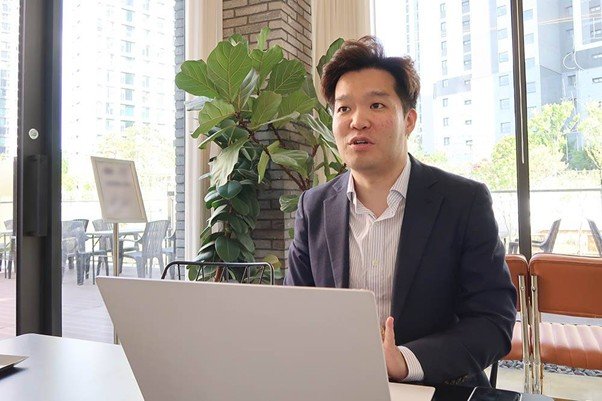
Jooyoung Joungexplaining TrueValue / Source = IT DongA
Expanding to recruitment solutions, preparing for global expansion into Japan and the US
What are your future plans and goals?
We plan to expand the application of solutions like DreamAppeal and MMS to the school level and proceed with the upgrading of the AI model in parallel. We are also preparing a market service for DreamAppeal where users can sell self-made clothes, character merchandise, poetry books, novels, etc., and plan to apply it in the second half of this year. In the future, we plan to expand it into a recruitment solution. Existing recruitment platforms show data of entry-level employees only through academic background, grades, and career. TrueValue possesses data such as changes in values, dreams, and practice details from adolescence, so it can analyze not only sincerity but also how well they fit into the corporate culture (culture fit). It is expected that more accurate talent evaluation will be possible than existing resumes.
Global expansion is also being prepared. Japan and India have similar education and economic environments to Korea, so the problems students face are similar. The US and Europe have high educational freedom, so demand for TrueValue's solutions is expected to be high. While promoting expansion into Japan, we plan to prepare for expansion into the US simultaneously.
TrueValue's solution understands better than any other AI what kind of person an individual wants to grow into. Based on this, we aim to be a company that grows with all talents in the world and acts as a "talent agency" for all talents. Ultimately, the goal is to grow into a deep-tech company representing the AI growth data infrastructure field.
By Man-hyuk Han (mh@itdonga.com)








 About Dong-A Ilbo