

Seoul must prepare for transactional US alliance shift
Seoul must prepare for transactional US alliance shift
Posted May. 18, 2026 08:21,
Updated May. 18, 2026 08:21
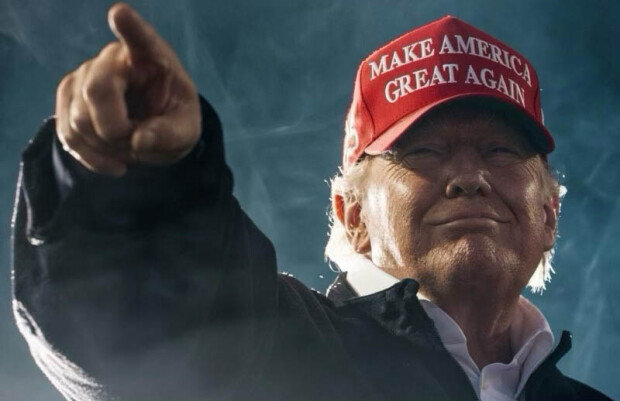
U.S. President Donald Trump said Friday that U.S. arms sales to Taiwan could be used as a “very good negotiating chip” in talks with China, adding that Washington could decide to approve or block such sales depending on diplomatic considerations. He also said the issue was discussed “in detail” during his summit with Chinese President Xi Jinping in Beijing, suggesting that military support for Taiwan, a key U.S. partner in East Asia and a frontline state in efforts to deter China, could become part of broader bargaining with Beijing.
Since 1982, the United States has maintained a set of policy commitments toward Taiwan known as the “Six Assurances,” including a pledge not to consult China in advance on arms sales. Together with the Taiwan Relations Act, which forms the legal basis for unofficial U.S.-Taiwan relations and outlines Washington’s security commitments in a crisis, these frameworks have long underpinned U.S. policy toward Taipei.
Trump’s remarks represent a clear departure from that longstanding approach and raise the possibility that even previously announced arms packages for Taiwan could be revisited more than four decades after the policy was put in place.
For Taiwan, which relies heavily on U.S. security guarantees, the comments are likely to have caused concern. Taipei has already responded to U.S. pressure by increasing defense spending and expanding arms purchases in response to China’s military buildup. Trump’s remarks, however, suggest that security commitments could be weighed against other diplomatic priorities, including expanded U.S. exports to China or Chinese cooperation on conflicts in the Middle East.
The comments reflect what critics describe as the “Trump risk,” a transactional approach in which U.S. strategic interests in major-power bargaining can take precedence over allied security concerns. A similar dynamic was seen last November when China imposed sweeping retaliatory measures against Japan following comments by Japanese Prime Minister Sanae Takaichi regarding a potential Taiwan contingency, with Trump not taking significant steps in response.
That pattern underscores growing uncertainty in Northeast Asia over the consistency of U.S. alliance commitments under a more transactional foreign policy approach.
Under such a framework, South Korea is also unlikely to be insulated. The Trump administration has pushed for greater strategic flexibility, including discussions about redeploying U.S. air defense assets stationed in South Korea, while urging Seoul to take on a larger share of responsibility for countering North Korean threats. On North Korea’s nuclear program, Washington has also emphasized prioritizing threats to the U.S. mainland, particularly intercontinental ballistic missiles.
Against this backdrop, analysts in Seoul are calling for more robust South Korea-U.S. communication channels to ensure that key security decisions are not made unilaterally or revealed only after consultations with third countries such as China or North Korea.



![“카페 화장실서 대변 금지” 자영업의 이상과 현실[2030세상/박찬용]](https://dimg.donga.com/c/138/175/90/1/wps/NEWS/IMAGE/2026/05/17/133938725.3.jpg)



 About Dong-A Ilbo