

U.S.-Iran talks proceed amid rising military tensions
U.S.-Iran talks proceed amid rising military tensions
Posted February. 05, 2026 09:02,
Updated February. 05, 2026 09:02
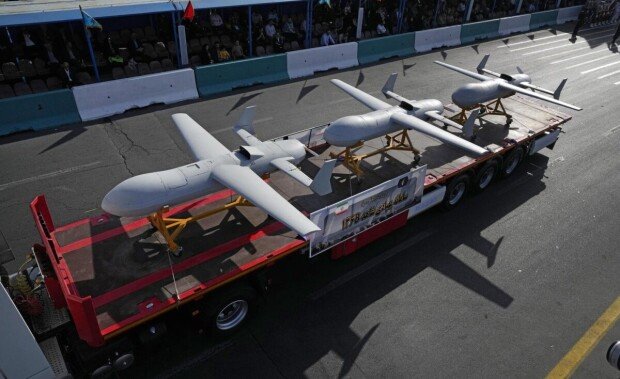
As White House special envoy Steve Witkoff and Iranian Foreign Minister Abbas Araghchi prepare for high-level talks in Oman on Feb. 6, military tensions between the two nations continue to escalate. On Feb. 3, the U.S. military said it shot down an Iranian unmanned aerial vehicle that approached the aircraft carrier Abraham Lincoln aggressively in the Arabian Sea, roughly 800 kilometers south of Iran. At the same time, the Islamic Revolutionary Guard Corps reportedly threatened a U.S.-flagged oil tanker in the nearby Strait of Hormuz.
Washington views these actions as part of Iran’s broader strategy to maximize leverage before the talks. Tehran also demanded and secured a change of venue, shifting the meeting from Istanbul, Turkiye, to Muscat, the Omani capital. Unlike Turkiye, which has long competed with Iran for regional influence, Oman is considered to have limited geopolitical clout and maintains cordial ties with Tehran. As the talks approach amid mounting brinkmanship, analysts warn that even a minor incident could escalate into a wider military confrontation.
● Iran flexes military muscle, forces change in venue
U.S. Central Command said the Iranian Shahed-139 drone that approached the Lincoln was shot down by an F-35 fighter jet, and confirmed there were no U.S. casualties. It added that two IRGC vessels and a Mohajer drone rapidly closed in on the civilian oil tanker Stena Impero and threatened to seize it.
Despite these developments, Washington stressed that the talks would go ahead as planned. On Feb. 3, U.S. President Donald Trump said, “We are negotiating with Iran, even as we speak. We have had more than one meeting.” White House press secretary Karoline Leavitt added, “I just spoke with envoy Witkoff. At this point, dialogue with Iran is moving forward as scheduled.”
Leavitt also noted that “President Trump, as commander in chief, has multiple options on the table with regard to Iran,” signaling that military measures remain under consideration. The Washington Post reported, citing satellite imagery, that the U.S. has deployed roughly 70 military aircraft, including F-35 fighters, and 12 naval vessels, including an aircraft carrier, across the Middle East. Analysts view the buildup as an effort to increase pressure on Iran if the Feb. 6 talks fail to produce the desired results. The newspaper said additional deployments of aircraft and warships are likely in the coming days.
Under U.S. pressure, Iran abruptly changed both the venue and format of the talks. According to Axios, Tehran shifted the location to Muscat and demanded a bilateral meeting with the United States, rejecting a prior plan that would have included key regional players such as Qatar, Egypt, Saudi Arabia, Oman, and Turkiye.
● Netanyahu voices distrust of Iran
Israeli Prime Minister Benjamin Netanyahu, a staunch critic of Iran, has repeatedly voiced dissatisfaction with the U.S.-Iran talks. During a Feb. 3 meeting with U.S. envoy Steve Witkoff in Israel, Netanyahu said Iran has repeatedly shown that its promises cannot be trusted and urged Washington not to place faith in Tehran.
Israel reportedly presented the United States with four preconditions for any agreement: transferring Iran’s highly enriched nuclear material to a third country, fully halting uranium enrichment, ending ballistic missile production, and terminating support for armed groups in the Middle East, including Hamas and Hezbollah. All four demands have been strongly opposed by Iran, making a breakthrough appear unlikely.
An Israeli senior official told local broadcaster N12 that any agreement that does not include these conditions is a bad deal,” adding that Israel “will exert influence over the negotiation process between the United States and Iran.”
Meanwhile, The Guardian reported Feb. 3 that mourners at funerals for civilians killed in Iran’s anti-government protests, which began Dec. 28, have been clapping and dancing to loud music. The newspaper said the practice signals a rejection of the somber funeral rites traditionally presided over by Shiite clerics and serves as a form of protest against Iran’s repressive theocratic system.
Keun-Hyung Yoo noel@donga.com


![하루 방귀 몇 번이 정상일까? 가장 많이 뀌는 시간대는…[건강팩트체크]](https://dimg.donga.com/c/138/175/90/1/wps/NEWS/IMAGE/2026/06/12/134098245.3.jpg)

![소음 막는 방음벽, 주민들이 “없애달라” 요구하는 이유는[부동산 빨간펜]](https://dimg.donga.com/c/138/175/90/1/wps/NEWS/IMAGE/2026/06/11/134096845.1.jpg)



 About Dong-A Ilbo