

Snowboarder Lee Sang-ho surges into Olympic spotlight
Snowboarder Lee Sang-ho surges into Olympic spotlight
Posted February. 02, 2026 08:57,
Updated February. 02, 2026 08:57
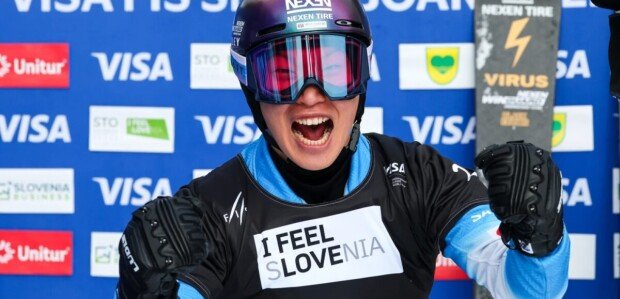
Lee Sang-ho claimed a long-awaited victory at a pivotal moment in the season. Known as the “Cabbage Boy,” the 31-year-old secured his first International Ski and Snowboard Federation World Cup win of the 2025-26 season just six days before the opening of the 2026 Milan-Cortina d’Ampezzo Winter Olympics.
Lee captured the men’s parallel giant slalom title at the season’s 13th Snowboard Alpine World Cup on Jan. 31 local time in Rogla, Slovenia. He edged veteran Roland Fischnaller of Italy by 0.24 seconds in the final. In parallel giant slalom, two riders start simultaneously, with the faster competitor advancing through each round until a winner is decided.
Lee made history at the 2018 PyeongChang Winter Olympics by winning silver in the parallel giant slalom, becoming South Korea’s first Olympic medalist in skiing or snowboarding. He entered the 2022 Beijing Games as a medal contender, but his bid for a second consecutive Olympic medal ended with a 0.01-second loss in the quarterfinals.
Heading into the Olympics, Lee had struggled to produce notable results and was largely absent from medal discussions. His World Cup victory on the eve of the Games, however, quickly restored his status as a leading contender for South Korea’s first Olympic gold medal in snow sports. The win marked his first World Cup victory in the parallel giant slalom since Dec. 11, 2021, a gap of 1,512 days. It was also his first World Cup win in any event since March 9, 2024, ending a 693-day drought.
“This season has been the worst of my career in terms of results,” Lee said. “That is why I wanted to win at least once before the Olympics. I tested many aspects of my equipment with only the Games in mind, and with the Olympics just ahead, I finally made it happen.”
Lee underwent surgery last May after fracturing his left wrist and still has metal pins in place. He was originally scheduled to have the pins removed around September but postponed the procedure to focus on training for the Olympic season. “This season has felt like the most pressure-filled of my career,” Lee said. “I knew I had to push myself beyond 100 percent to achieve a good result, and that was frightening at times. I am truly proud of myself for pulling it off.”
National team coach Lee Sang-heon praised his athlete’s recovery and current form. “Even though he returned soon after surgery, Lee Sang-ho's offseason training went very well,” the coach said. “When results did not come early in the season, the mood dipped. But he showed he had fully regained his form by finishing first in qualifying at the previous World Cup. His technique remains among the best in the world.”
Coach Lee added that snowboard alpine events are contested in natural outdoor conditions rather than controlled indoor courses, making outcomes inherently unpredictable. “You need favorable conditions to achieve the best result,” he said. “If the conditions cooperate, the opportunity for gold will come. I am confident, and Sang-ho is even more confident than I am.”
Lee and the rest of the national snowboard alpine team traveled by land on Feb. 1 to Livigno, Italy, the venue for the Olympic snowboard events. The parallel giant slalom is scheduled for Feb. 8, with qualifying rounds followed by finals. Among individual events featuring South Korean athletes, it is expected to be the first to produce a medal.
Omega, the official Olympic timekeeper, has announced it will present a 2026 Olympic edition watch to South Korea’s first individual gold medalist at the Games. Lee Sang-ho will be the first athlete with a chance to claim that honor.
Bo-Mi Im bom@donga.com








 About Dong-A Ilbo