

MedInTech, “Revolutionizing Endoscopy Through Electrification and Physical AI”
MedInTech, “Revolutionizing Endoscopy Through Electrification and Physical AI”
Posted December. 17, 2025 10:43,
- MedInTech is transforming endoscopy in Korea by replacing heavy, mechanically operated devices with electrified systems and integrating Physical AI, which improves both usability and diagnostic accuracy for physicians and patients.
- The company’s innovations have been validated through extensive clinical trials at major hospitals, demonstrating performance equal to or better than foreign competitors, while also offering significant cost savings.
- Supported by organizations like the Seoul Business Agency, MedInTech aims to standardize high-quality medical care globally, making advanced treatment accessible regardless of a physician’s experience.
In an era of increasing longevity, early disease detection is the cornerstone of healthy aging. Cancer, a leading cause of death among Koreans, is a prime example. Fortunately, digestive tract diseases—including colon, pancreatic, and stomach cancers—can be detected early through non-invasive endoscopy. However, the Korean endoscopy market remains heavily dominated by foreign monopolies, resulting in a stagnant pace of technological innovation.
Most endoscopic equipment currently used in domestic hospitals relies on mechanical systems. These devices operate via a wire-pulling mechanism: when a physician rotates a dial on the handle, a wire tensioner moves the tip of the endoscopic lens. This legacy design is notoriously heavy—weighing nearly 1kg—and the high resistance of the dials places excessive strain on the operator. Many endoscopists suffer from chronic musculoskeletal disorders, including "endoscopist’s thumb" (arthritis) and wrist pain, due to the physical exertion required during procedures.
Furthermore, mechanical operation demands a steep learning curve, often requiring years of one-on-one apprenticeship. Because diagnosis relies heavily on a physician’s tactile intuition, the accuracy of detection can vary significantly based on individual skill levels—a factor that directly impacts patient safety. Despite these issues, global market leaders have largely focused on incremental image quality improvements rather than overhauling the fundamental ergonomics of the hardware.
From Surgical Robots to Endoscopic Innovation
"The barriers to entry for a surgical robot startup, in terms of initial capital and manpower, were incredibly high," said Chi-won Lee, CEO of MedInTech. "While searching for a sector where our technology could have the greatest impact, we saw the endoscopy market. Imaging had advanced, but the mechanical drive systems remained archaic. We believed we could win by combining electrification with Artificial Intelligence."
Lee and co-founder Myung-joon Kim were engineers at Seoul National University specializing in medical robotics. After graduation, they continued their research at the Korea Electrotechnology Research Institute (KERI), exploring how to apply precision motor control—the core of surgical robotics—to other medical fields.
MedInTech tackled the mechanical bottleneck head-on. By designing an electrified endoscope, they drastically reduced the weight of the controller and laid the groundwork for fully automated procedures. Every component responsible for steering the lens was replaced with electric actuators.
"Traditional endoscopy feels like lifting a 1kg dumbbell while pulling a string with your fingers," Lee explained. "Our product uses motors to handle the heavy lifting. We’ve cut the handle weight in half, and the dial requires almost zero force. When a physician’s fatigue is reduced, that benefit ultimately returns to the patient through more precise care."
MedInTech is also integrating Physical AI. Their AI algorithms can automatically detect lesions and analyze the internal gastrointestinal environment to guide the lens. Lee likens this transition to the shift from internal combustion engines to electric vehicles: once a system is electrified, autonomous functionality becomes possible.
Overcoming Medical Conservatism with Data
The primary challenge for any medical startup is overcoming the industry’s inherent risk-aversion. To break the monopoly of foreign brands, MedInTech leaned into clinical data. Over the past two years, the company conducted approximately 500 clinical trials across six major university hospitals, including Seoul National University Hospital.
"A 500-person clinical trial is a massive undertaking for a startup, but it was essential," Lee recalled. "The results proved that our performance is on par with or superior to foreign counterparts, with significantly better usability. It’s the result of focusing on User Experience (UX) innovation—maintaining a familiar feel for doctors while removing the physical burden."
Beyond technical superiority, MedInTech offers economic efficiency. Frequent breakdowns and exorbitant repair costs are chronic headaches for hospital administrators. MedInTech has priced its equipment and maintenance at approximately 60% of foreign competitors, a feat made possible by localizing both manufacturing and service.
A Vision for Global Medical Solutions
As the company secures domestic and international sales networks in 2025, it is preparing for mass adoption in 2026. This growth has been catalyzed by the Seoul Business Agency (SBA), which provided R&D funding, networking, and marketing support. MedInTech was also designated as a "Hi-Seoul" certified company, an honor given to promising businesses in the capital.
"SBA didn't just provide funding; they helped us learn how to communicate with the public and opened doors to international markets like Indonesia," Lee said.
The name "MedInTech" reflects a mission to embed advanced technology into medicine. While they started with endoscopes, the company’s vision is broader. "We want to achieve a 'high-level standardization' of medical care, where any physician can provide top-tier treatment regardless of their years of experience," Lee concluded. "By evolving into an integrated platform that covers the entire cycle from diagnosis to treatment, we aim to provide convenience to doctors and, most importantly, safety to patients."
By Hyung-seok Kang (redbk@itdonga.com)
* This article was written with support from SBA and Seoul City.
- The company’s innovations have been validated through extensive clinical trials at major hospitals, demonstrating performance equal to or better than foreign competitors, while also offering significant cost savings.
- Supported by organizations like the Seoul Business Agency, MedInTech aims to standardize high-quality medical care globally, making advanced treatment accessible regardless of a physician’s experience.
In an era of increasing longevity, early disease detection is the cornerstone of healthy aging. Cancer, a leading cause of death among Koreans, is a prime example. Fortunately, digestive tract diseases—including colon, pancreatic, and stomach cancers—can be detected early through non-invasive endoscopy. However, the Korean endoscopy market remains heavily dominated by foreign monopolies, resulting in a stagnant pace of technological innovation.
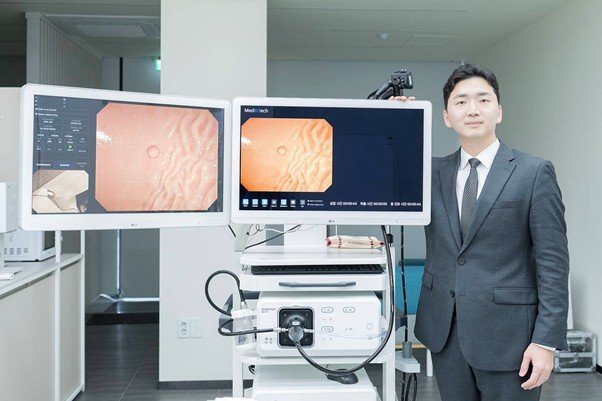
Chi-won Lee, CEO of MedInTech / source=IT dongA
Most endoscopic equipment currently used in domestic hospitals relies on mechanical systems. These devices operate via a wire-pulling mechanism: when a physician rotates a dial on the handle, a wire tensioner moves the tip of the endoscopic lens. This legacy design is notoriously heavy—weighing nearly 1kg—and the high resistance of the dials places excessive strain on the operator. Many endoscopists suffer from chronic musculoskeletal disorders, including "endoscopist’s thumb" (arthritis) and wrist pain, due to the physical exertion required during procedures.
Furthermore, mechanical operation demands a steep learning curve, often requiring years of one-on-one apprenticeship. Because diagnosis relies heavily on a physician’s tactile intuition, the accuracy of detection can vary significantly based on individual skill levels—a factor that directly impacts patient safety. Despite these issues, global market leaders have largely focused on incremental image quality improvements rather than overhauling the fundamental ergonomics of the hardware.
From Surgical Robots to Endoscopic Innovation
"The barriers to entry for a surgical robot startup, in terms of initial capital and manpower, were incredibly high," said Chi-won Lee, CEO of MedInTech. "While searching for a sector where our technology could have the greatest impact, we saw the endoscopy market. Imaging had advanced, but the mechanical drive systems remained archaic. We believed we could win by combining electrification with Artificial Intelligence."
Lee and co-founder Myung-joon Kim were engineers at Seoul National University specializing in medical robotics. After graduation, they continued their research at the Korea Electrotechnology Research Institute (KERI), exploring how to apply precision motor control—the core of surgical robotics—to other medical fields.
MedInTech tackled the mechanical bottleneck head-on. By designing an electrified endoscope, they drastically reduced the weight of the controller and laid the groundwork for fully automated procedures. Every component responsible for steering the lens was replaced with electric actuators.
"Traditional endoscopy feels like lifting a 1kg dumbbell while pulling a string with your fingers," Lee explained. "Our product uses motors to handle the heavy lifting. We’ve cut the handle weight in half, and the dial requires almost zero force. When a physician’s fatigue is reduced, that benefit ultimately returns to the patient through more precise care."
MedInTech is also integrating Physical AI. Their AI algorithms can automatically detect lesions and analyze the internal gastrointestinal environment to guide the lens. Lee likens this transition to the shift from internal combustion engines to electric vehicles: once a system is electrified, autonomous functionality becomes possible.
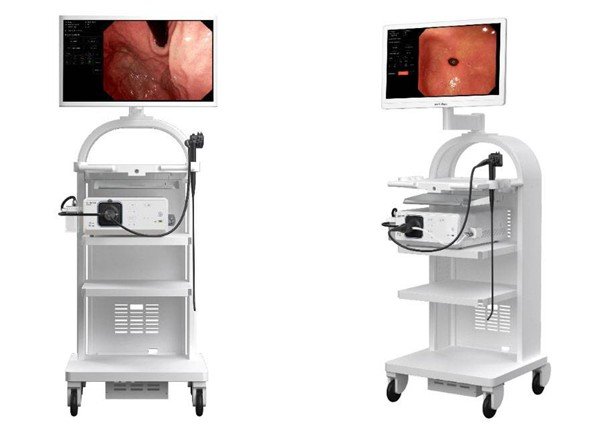
ME-400(left), ME-470(right) of MedInTech / source=MedInTech
Overcoming Medical Conservatism with Data
The primary challenge for any medical startup is overcoming the industry’s inherent risk-aversion. To break the monopoly of foreign brands, MedInTech leaned into clinical data. Over the past two years, the company conducted approximately 500 clinical trials across six major university hospitals, including Seoul National University Hospital.
"A 500-person clinical trial is a massive undertaking for a startup, but it was essential," Lee recalled. "The results proved that our performance is on par with or superior to foreign counterparts, with significantly better usability. It’s the result of focusing on User Experience (UX) innovation—maintaining a familiar feel for doctors while removing the physical burden."
Beyond technical superiority, MedInTech offers economic efficiency. Frequent breakdowns and exorbitant repair costs are chronic headaches for hospital administrators. MedInTech has priced its equipment and maintenance at approximately 60% of foreign competitors, a feat made possible by localizing both manufacturing and service.
A Vision for Global Medical Solutions
As the company secures domestic and international sales networks in 2025, it is preparing for mass adoption in 2026. This growth has been catalyzed by the Seoul Business Agency (SBA), which provided R&D funding, networking, and marketing support. MedInTech was also designated as a "Hi-Seoul" certified company, an honor given to promising businesses in the capital.
"SBA didn't just provide funding; they helped us learn how to communicate with the public and opened doors to international markets like Indonesia," Lee said.
The name "MedInTech" reflects a mission to embed advanced technology into medicine. While they started with endoscopes, the company’s vision is broader. "We want to achieve a 'high-level standardization' of medical care, where any physician can provide top-tier treatment regardless of their years of experience," Lee concluded. "By evolving into an integrated platform that covers the entire cycle from diagnosis to treatment, we aim to provide convenience to doctors and, most importantly, safety to patients."
By Hyung-seok Kang (redbk@itdonga.com)
* This article was written with support from SBA and Seoul City.








 About Dong-A Ilbo