

Angel Robotics Prepares for the Hyper-Aged Era with Wearable Medical Robots
Angel Robotics Prepares for the Hyper-Aged Era with Wearable Medical Robots
Posted December. 16, 2025 14:12,
Updated December. 16, 2025 14:13
- Angel Robotics is addressing South Korea’s aging society and shortage of care personnel by developing wearable medical robots for rehabilitation and daily walking assistance, using advanced technology that adapts to users’ intentions and collects medical data for personalized treatment.
- The company is expanding globally, having secured medical device approvals in several Southeast Asian countries, and is building local clinical networks while preparing for entry into Europe and the U.S..
- Angel Robotics emphasizes the importance of regulatory approval, organizational growth, and policy support to establish wearable robots as essential infrastructure in healthcare, aiming to create a future where technology enhances human recovery and daily life.
South Korea, already navigating the complexities of a hyper-aged society, is confronting a critical shortage of care personnel, driven by a surge in chronic diseases and a growing need for rehabilitation services. According to estimates by the Ministry of Health and Welfare (MOHW), the nation faces a projected shortfall of up to 1.55 million eldercare workers by 2042. This staffing crisis has been palpable for years, prompting the government to even consider recruiting foreign caregivers to bridge the gap.
In this context, "wearable medical robots"—devices capable of compensating for the labor deficit—are no longer viewed as a futuristic novelty but as essential infrastructure. Angel Robotics, a specialized robotics company, is positioning itself to mitigate the challenges of the hyper-aged era with its wearable robots focused on rehabilitation and walking assistance. We spoke with Julian Nammin Cho, CEO of Angel Robotics, to delve into the technology.
‘A Company that Aids Human Recovery’: Building the Rehabilitation Ecosystem
Angel Robotics operates under the mission, "Helping and recreating human recovery through technology," developing and supplying wearable robots to protect healthy daily lives. The company’s business is structured around three main pillars: Healthcare, Defense, and Industrial Safety.
The company emphasizes that it has established a full-cycle care solution, extending from hospital-based treatment to at-home rehabilitation, centered on its core products: ANGEL LEGS M20 for gait rehabilitation and ANGEL SUIT H10 for daily walking assistance and muscle strength augmentation.
"Angel Robotics is differentiated by its human-centric Physical AI—robots that sense and react to a user’s intentions in real-time," Cho explains. "Instead of patients having to adapt to the robot’s movements, we developed a system where the robot adjusts to the user’s biosignals."
The product portfolio encompasses support from severe rehabilitation to daily life assistance.
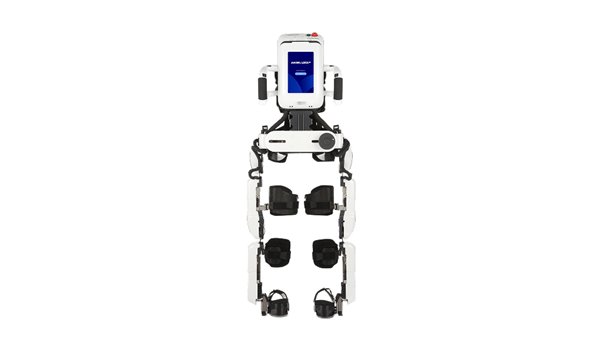
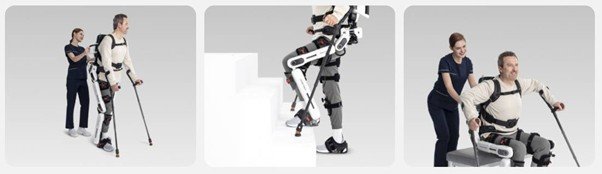
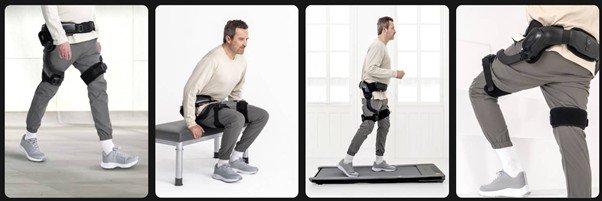
• ANGEL LEGS M20 is designed for hospital use, targeting patients with severe to moderate lower-limb paralysis. It assists with walking on flat ground, climbing stairs, and squat training. The device supports the entire lower body, aiding in the reconstruction of lower-limb muscles for walking and the recovery of joint movement. It operates by utilizing sensors on each joint to detect the wearer's intention to walk.
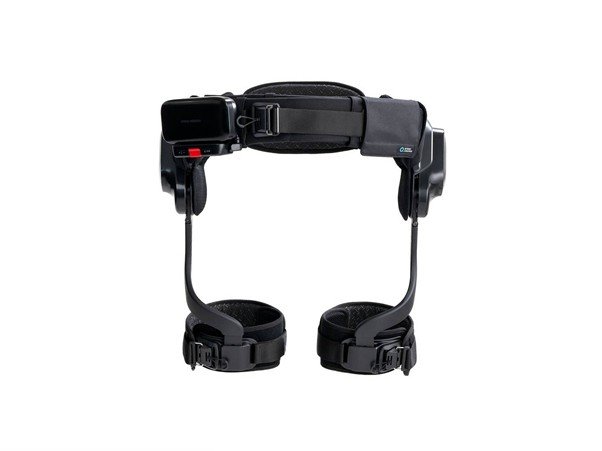
• ANGEL SUIT H10 is aimed at the home rehabilitation, wellness, and mild disability/elderly markets. It analyzes the wearer's movements in real-time to facilitate natural walking, specifically assisting hip flexion and extension. This lightweight robot also supports user intention, offering a maximum assistance torque of 15 Nm and features individually adjustable power settings, significantly enhancing user convenience.
Cho stressed that this system realizes a D2P (Direct-to-Patient) structure, assisting recovery from structured hospital rehabilitation to daily life.
He added, "As patients use our wearable robots, Angel Robotics accumulates data on their gait, balance, and muscle strength, generating medical evidence and customized treatment protocols. This is a critical infrastructure that can evolve into a system based on insurance coverage and preventative medicine."
"The products are designed to continually learn from user data, automatically adjusting the intensity of treatment and the level of assistance," Cho said. "We are building an integrated wearable platform that unifies medical data, clinical evidence, and technology around our wearable robots."
Global Push Bolstered by SBA Support; Targeting Asian Healthcare Markets
While supplying products to major university hospitals and various medical institutions domestically, Angel Robotics is squarely focused on the global stage.
"This year, Angel Robotics has successfully secured medical device approvals consecutively in Thailand, Vietnam, and Malaysia, significantly accelerating our global expansion," Cho stated. "This is a rare achievement for a South Korean medical robotics firm and validates the rapidly growing interest in wearable robots among Southeast Asian medical institutions."
He noted that Southeast Asia presents high demand due to the confluence of an aging population, rising industrial accidents, and a shortage of rehabilitation personnel. Angel Robotics is pursuing a strategic expansion focused not just on simple exports but on "analyzing country-specific medical infrastructure and establishing local clinical networks." The goal is to complete the 'Asia Big 5' market, with plans to enter Indonesia and Singapore next, while simultaneously preparing for European and U.S. entry via the EU Medical Device Regulation (CE MDR) and U.S. Food and Drug Administration (FDA) certifications.
Cho credits the Seoul Business Agency (SBA) for playing a significant role in enhancing technological completeness and strengthening the business model for the company's overseas pivot.
"The testbed provided by the SBA allowed us to verify clinical efficacy and functional safety based on real patient data," he explained. "Through the Robot Technology Commercialization Project, we were able to conduct demonstrations of the daily walking assistance model with various citizens in public facilities. This experience confirmed the market potential for rehabilitation outside the hospital setting." He noted that the use of their robots in public facilities under the Seoul Metropolitan Government's 'Accompanying the Vulnerable' policy served as a crucial "litmus test" for the formation of the wearable robot market.
A Four-Pillar Strategy for Global Growth
Angel Robotics identifies four key challenges necessary for its next leap forward: securing global regulatory approvals and clinical data, building real-world demand in overseas markets, expanding organizational capacity, and establishing an institutional foundation for medical robots.
"The medical robotics industry cannot grow on technology alone; it requires the simultaneous establishment of country-specific regulatory frameworks and clinical evidence," Cho emphasized. "We are pursuing CE MDR and FDA approvals in phases and are quantitatively proving treatment efficacy through international multi-center clinical trials."
He added that strategic market selection is key for building overseas demand. "The reason we rapidly secured approvals in the Southeast Asian market was not for simple export, but because we strategically chose markets where immediate demand would arise, considering the medical infrastructure, economic structure, and patient population." The company plans to complete its "medical robot ecosystem" locally by strengthening partnerships, clinical collaborations, and service networks across the five Asian countries.
Cho also stressed the need for organizational expansion. "In the convergence industry of robotics, AI, and medical devices, R&D, clinical trials, regulation, manufacturing, and service must all move in lockstep. We aim to build a global-standard organizational structure that connects product planning, clinical trials, data, and service operations into a single flow. The most crucial foundation for growth is organizational alignment and capability."
Finally, establishing an institutional foundation for medical robots is essential. "The robots we create are medical devices, and sustained utilization within the healthcare ecosystem requires insurance coverage and policy support," Cho asserted. "Rehabilitation robots are not mere equipment; they possess clear public value—accelerating patient recovery, reducing long-term care costs, easing the burden on medical staff, and cutting social costs. Only when this value is recognized within the system can both medical institutions and patients benefit, and the industry can simultaneously grow."
Angel Robotics: "Completing the Future of Rehabilitation Where Patients and Medical Staff Grow Together"
In closing, we asked about Angel Robotics' ultimate goal.
"This year has been Angel Robotics' 'Year of the Leap,'" Cho proudly concluded. "We believe we have reached the threshold of full-scale growth, demonstrating prominence in technology, products, and global markets. Securing medical device approvals in three Asian countries this year laid the groundwork for the acceleration of our overseas revenue."
He highlighted the launch of the ANGEL SUIT H10, which pioneered the home rehabilitation and wellness market, and the three-time consecutive recognition, including a Gold Medal at the Cybathlon 2024 international competition, as proof of their technological prowess. Furthermore, product supply to over 100 medical institutions in Korea has secured on-site confidence in treatment efficacy.
"Based on these achievements, we will construct a wearable robot ecosystem that integrates technology, clinical practice, data, and policy, thus 'completing the future of rehabilitation where patients and medical staff grow together,'" Cho affirmed. "In the robotics industry—which is emerging as the solution to the hyper-aging era's high medical costs and labor shortages—we are committed to R&D to become a global leader representing South Korea. The era is approaching where robots do not replace humans but extend human capabilities. In this era, we will establish ourselves as the company responsible for restoring people and their daily lives through technology."
By Dong-jin Kim (kdj@itdonga.com)
* This article was written with support from SBA and Seoul City.
- The company is expanding globally, having secured medical device approvals in several Southeast Asian countries, and is building local clinical networks while preparing for entry into Europe and the U.S..
- Angel Robotics emphasizes the importance of regulatory approval, organizational growth, and policy support to establish wearable robots as essential infrastructure in healthcare, aiming to create a future where technology enhances human recovery and daily life.
South Korea, already navigating the complexities of a hyper-aged society, is confronting a critical shortage of care personnel, driven by a surge in chronic diseases and a growing need for rehabilitation services. According to estimates by the Ministry of Health and Welfare (MOHW), the nation faces a projected shortfall of up to 1.55 million eldercare workers by 2042. This staffing crisis has been palpable for years, prompting the government to even consider recruiting foreign caregivers to bridge the gap.
In this context, "wearable medical robots"—devices capable of compensating for the labor deficit—are no longer viewed as a futuristic novelty but as essential infrastructure. Angel Robotics, a specialized robotics company, is positioning itself to mitigate the challenges of the hyper-aged era with its wearable robots focused on rehabilitation and walking assistance. We spoke with Julian Nammin Cho, CEO of Angel Robotics, to delve into the technology.
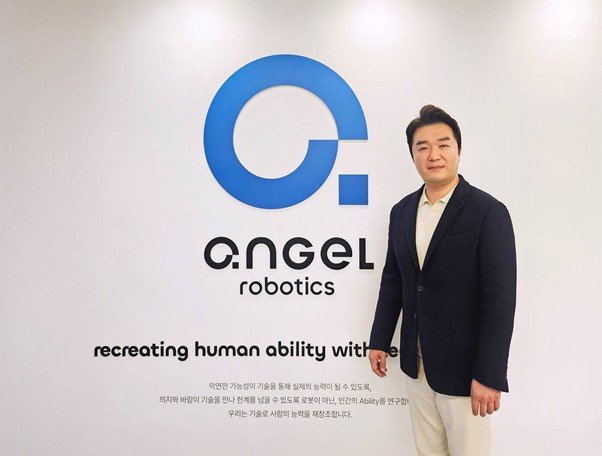
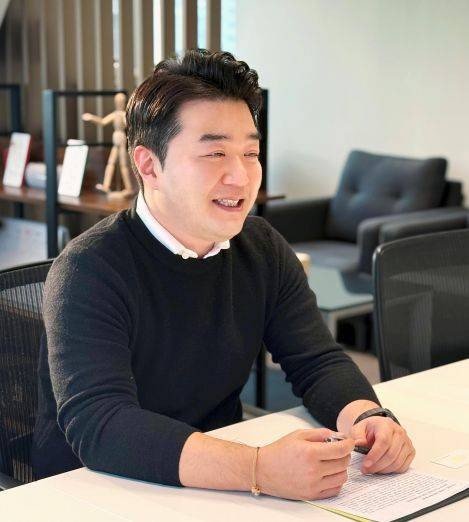
Julian Nammin Cho, CEO of Angel Robotics / source=Angel Robotics
‘A Company that Aids Human Recovery’: Building the Rehabilitation Ecosystem
Angel Robotics operates under the mission, "Helping and recreating human recovery through technology," developing and supplying wearable robots to protect healthy daily lives. The company’s business is structured around three main pillars: Healthcare, Defense, and Industrial Safety.
The company emphasizes that it has established a full-cycle care solution, extending from hospital-based treatment to at-home rehabilitation, centered on its core products: ANGEL LEGS M20 for gait rehabilitation and ANGEL SUIT H10 for daily walking assistance and muscle strength augmentation.
"Angel Robotics is differentiated by its human-centric Physical AI—robots that sense and react to a user’s intentions in real-time," Cho explains. "Instead of patients having to adapt to the robot’s movements, we developed a system where the robot adjusts to the user’s biosignals."
The product portfolio encompasses support from severe rehabilitation to daily life assistance.
• ANGEL LEGS M20 is designed for hospital use, targeting patients with severe to moderate lower-limb paralysis. It assists with walking on flat ground, climbing stairs, and squat training. The device supports the entire lower body, aiding in the reconstruction of lower-limb muscles for walking and the recovery of joint movement. It operates by utilizing sensors on each joint to detect the wearer's intention to walk.
• ANGEL SUIT H10 is aimed at the home rehabilitation, wellness, and mild disability/elderly markets. It analyzes the wearer's movements in real-time to facilitate natural walking, specifically assisting hip flexion and extension. This lightweight robot also supports user intention, offering a maximum assistance torque of 15 Nm and features individually adjustable power settings, significantly enhancing user convenience.
Cho stressed that this system realizes a D2P (Direct-to-Patient) structure, assisting recovery from structured hospital rehabilitation to daily life.
ANGEL LEGS M20 / source=Angel Robotics
Wearing ANGEL LEGS M20 / source=Angel Robotics
ANGEL SUIT H10 / source: Angel Robotics
Wearing ANGEL SUIT H10 / source=Angel Robotics
He added, "As patients use our wearable robots, Angel Robotics accumulates data on their gait, balance, and muscle strength, generating medical evidence and customized treatment protocols. This is a critical infrastructure that can evolve into a system based on insurance coverage and preventative medicine."
"The products are designed to continually learn from user data, automatically adjusting the intensity of treatment and the level of assistance," Cho said. "We are building an integrated wearable platform that unifies medical data, clinical evidence, and technology around our wearable robots."
Global Push Bolstered by SBA Support; Targeting Asian Healthcare Markets
While supplying products to major university hospitals and various medical institutions domestically, Angel Robotics is squarely focused on the global stage.
"This year, Angel Robotics has successfully secured medical device approvals consecutively in Thailand, Vietnam, and Malaysia, significantly accelerating our global expansion," Cho stated. "This is a rare achievement for a South Korean medical robotics firm and validates the rapidly growing interest in wearable robots among Southeast Asian medical institutions."
He noted that Southeast Asia presents high demand due to the confluence of an aging population, rising industrial accidents, and a shortage of rehabilitation personnel. Angel Robotics is pursuing a strategic expansion focused not just on simple exports but on "analyzing country-specific medical infrastructure and establishing local clinical networks." The goal is to complete the 'Asia Big 5' market, with plans to enter Indonesia and Singapore next, while simultaneously preparing for European and U.S. entry via the EU Medical Device Regulation (CE MDR) and U.S. Food and Drug Administration (FDA) certifications.
Cho credits the Seoul Business Agency (SBA) for playing a significant role in enhancing technological completeness and strengthening the business model for the company's overseas pivot.
"The testbed provided by the SBA allowed us to verify clinical efficacy and functional safety based on real patient data," he explained. "Through the Robot Technology Commercialization Project, we were able to conduct demonstrations of the daily walking assistance model with various citizens in public facilities. This experience confirmed the market potential for rehabilitation outside the hospital setting." He noted that the use of their robots in public facilities under the Seoul Metropolitan Government's 'Accompanying the Vulnerable' policy served as a crucial "litmus test" for the formation of the wearable robot market.
Julian Nammin Cho, CEO of Angel Robotics / source=Angel Robotics
A Four-Pillar Strategy for Global Growth
Angel Robotics identifies four key challenges necessary for its next leap forward: securing global regulatory approvals and clinical data, building real-world demand in overseas markets, expanding organizational capacity, and establishing an institutional foundation for medical robots.
"The medical robotics industry cannot grow on technology alone; it requires the simultaneous establishment of country-specific regulatory frameworks and clinical evidence," Cho emphasized. "We are pursuing CE MDR and FDA approvals in phases and are quantitatively proving treatment efficacy through international multi-center clinical trials."
He added that strategic market selection is key for building overseas demand. "The reason we rapidly secured approvals in the Southeast Asian market was not for simple export, but because we strategically chose markets where immediate demand would arise, considering the medical infrastructure, economic structure, and patient population." The company plans to complete its "medical robot ecosystem" locally by strengthening partnerships, clinical collaborations, and service networks across the five Asian countries.
Cho also stressed the need for organizational expansion. "In the convergence industry of robotics, AI, and medical devices, R&D, clinical trials, regulation, manufacturing, and service must all move in lockstep. We aim to build a global-standard organizational structure that connects product planning, clinical trials, data, and service operations into a single flow. The most crucial foundation for growth is organizational alignment and capability."
Finally, establishing an institutional foundation for medical robots is essential. "The robots we create are medical devices, and sustained utilization within the healthcare ecosystem requires insurance coverage and policy support," Cho asserted. "Rehabilitation robots are not mere equipment; they possess clear public value—accelerating patient recovery, reducing long-term care costs, easing the burden on medical staff, and cutting social costs. Only when this value is recognized within the system can both medical institutions and patients benefit, and the industry can simultaneously grow."
Angel Robotics: "Completing the Future of Rehabilitation Where Patients and Medical Staff Grow Together"
In closing, we asked about Angel Robotics' ultimate goal.
"This year has been Angel Robotics' 'Year of the Leap,'" Cho proudly concluded. "We believe we have reached the threshold of full-scale growth, demonstrating prominence in technology, products, and global markets. Securing medical device approvals in three Asian countries this year laid the groundwork for the acceleration of our overseas revenue."
He highlighted the launch of the ANGEL SUIT H10, which pioneered the home rehabilitation and wellness market, and the three-time consecutive recognition, including a Gold Medal at the Cybathlon 2024 international competition, as proof of their technological prowess. Furthermore, product supply to over 100 medical institutions in Korea has secured on-site confidence in treatment efficacy.
"Based on these achievements, we will construct a wearable robot ecosystem that integrates technology, clinical practice, data, and policy, thus 'completing the future of rehabilitation where patients and medical staff grow together,'" Cho affirmed. "In the robotics industry—which is emerging as the solution to the hyper-aging era's high medical costs and labor shortages—we are committed to R&D to become a global leader representing South Korea. The era is approaching where robots do not replace humans but extend human capabilities. In this era, we will establish ourselves as the company responsible for restoring people and their daily lives through technology."
By Dong-jin Kim (kdj@itdonga.com)
* This article was written with support from SBA and Seoul City.

![북한군 간호사에서 세계 누비는 사업가 되기까지[주성하의 북에서 온 이웃]](https://dimg.donga.com/c/138/175/90/1/wps/NEWS/IMAGE/2026/05/24/133981366.1.jpg)





 About Dong-A Ilbo