

Japan considers nuclear submarines amid regional security changes
Japan considers nuclear submarines amid regional security changes
Posted November. 13, 2025 07:52,
Updated November. 13, 2025 07:52
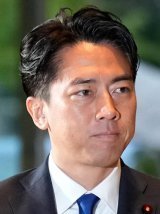
Japanese Defense Minister Shinjiro Koizumi said it is natural for Japan to consider acquiring nuclear-powered submarines, citing South Korea and Australia as examples. His comments signaled Tokyo’s intent to pursue such capabilities after U.S. President Donald Trump last month approved South Korea’s plan to introduce nuclear-powered submarines.
Speaking before the House of Councillors Budget Committee on Nov. 12, Koizumi said, “South Korea and Australia, which do not currently have nuclear-powered submarines, will soon possess them, while the United States and China already do.” He added that in this environment, enhancing deterrence and response capabilities makes it natural to discuss new propulsion systems, whether solid-state batteries, fuel cells, or nuclear power, and to examine their challenges, potential, advantages, and disadvantages.
When he took office on Oct. 22, Koizumi had cautiously said the possibility of introducing nuclear-powered submarines cannot be ruled out. He has now made his position clearer, saying such discussions are “only natural.”
The nuclear-powered submarines Japan is considering, like those pursued by South Korea, would use nuclear material only as a power source and would not carry nuclear weapons. Even so, the new administration of Prime Minister Sanae Takaichi has avoided giving a clear answer on whether it will uphold Japan’s long-standing “three non-nuclear principles,” which prohibit the possession, production, and import of nuclear weapons.
When asked about maintaining those principles in the House of Representatives the previous day, Takaichi declined to give a definitive answer. On Tuesday, Chief Cabinet Secretary Minoru Kihara also left room for interpretation, saying he would not make a preemptive judgment on whether to review the policy. The comments have fueled speculation that the government might be leaving open the possibility of allowing U.S. nuclear weapons into Japan in a crisis.
Meanwhile, the Asahi Shimbun reported on Nov. 12 that the Takaichi administration is moving quickly to revise procedures to expand lethal weapons exports. Under current guidelines, Japan limits defense equipment exports to five categories, such as transport, rescue, surveillance, observation, and minesweeping, under the “Three Principles on Transfer of Defense Equipment and Technology.” The ruling Liberal Democratic Party and the Japan Innovation Party have already agreed to lift these export restrictions by next year, and discussions have reportedly begun.
Because the changes do not require new legislation, the government can proceed independently. The Asahi Shimbun also reported that Tokyo is considering easing restrictions on export purposes, which are currently limited to proactive contributions to peace and international cooperation, and on eligible destination countries, which are currently restricted to allied nations and others.
In-Chan Hwang hic@donga.com







 About Dong-A Ilbo