

Seoul, Washington to launch council for shipbuilding cooperation
Seoul, Washington to launch council for shipbuilding cooperation
Posted November. 06, 2025 07:16,
Updated November. 06, 2025 07:16
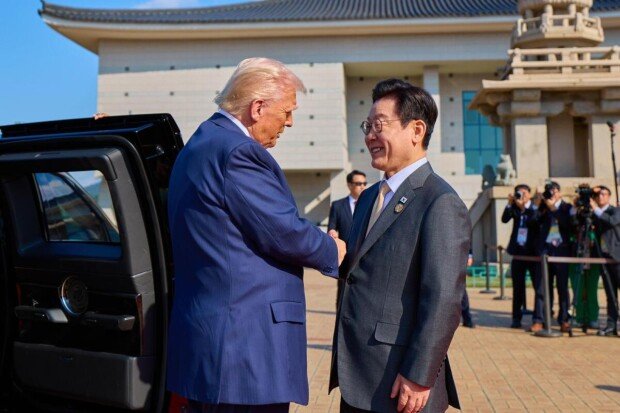
The South Korean government plans to discuss allowing U.S. military vessels to be built in South Korea through a new “Shipbuilding Cooperation Council” to be established between the National Security Councils of South Korea and the United States. The council, created following a bilateral summit, is intended to accelerate efforts to ease U.S. shipbuilding regulations that have long been seen as obstacles to cooperation in the industry.
According to multiple government sources on Nov. 5, Seoul plans to begin talks with Washington on ways to bypass U.S. shipbuilding restrictions once the NSC-level council is launched. During the Oct. 29 summit, President Lee Jae-myung and U.S. President Donald Trump agreed to establish the NSC Shipbuilding Cooperation Council to strengthen collaboration in the sector. “The structure and agenda of the council will be discussed with the U.S. at a later stage," a senior government official said.
The South Korean government believes that easing U.S. shipbuilding regulations is essential for the success of the “MASGA” initiative, short for “Make American Shipbuilding Great Again,” which envisions $150 billion in investments centered on South Korean companies. Currently, the Burns-Tollefson Act prohibits U.S. naval vessels, hulls, and key components from being built overseas, while the Jones Act requires that only U.S.-made ships be used for cargo transport between domestic ports.
In August, the U.S. Department of the Navy reportedly asked Seoul for its opinion on a plan to circumvent these regulations. During the discussions, President Trump reportedly proposed issuing an executive order to exempt South Korean companies from U.S. shipbuilding restrictions. Several bills to ease maritime regulations, including provisions to exempt allied nations under the Jones Act, have recently been introduced in Congress. However, as these bills are unlikely to pass soon, discussions reportedly included the option of a temporary executive order by President Trump to bypass the restrictions.
A separate working group between South Korea’s Defense Acquisition Program Administration and the U.S. Navy was later established, but follow-up discussions have made little progress. A government source said, “We understand the talks did not move quickly because many key issues require political decisions at the White House level.”
However, with the presidential offices of both countries now agreeing to form a direct working-level council, expectations are rising that regulatory easing for South Korea-U.S. shipbuilding cooperation could gain momentum. South Korean shipbuilders believe that even if they invest in the United States through the MASGA project, collaboration with domestic shipbuilding facilities will remain essential. The upcoming NSC Shipbuilding Cooperation Council is not expected to address issues related to South Korea’s pursuit of nuclear-powered submarines.
Kyu-Jin Shin newjin@donga.com







 About Dong-A Ilbo