

SME loan defaults surge to 15-year high in Korea
SME loan defaults surge to 15-year high in Korea
Posted November. 06, 2025 07:16,
Updated November. 06, 2025 07:16
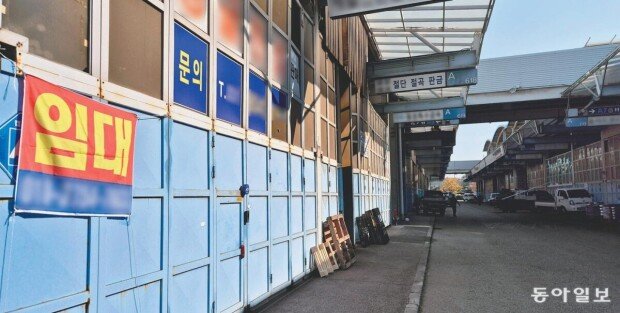
“Our suppliers have gone bankrupt, so we have not received payments. The backlog is so severe that we cannot even determine exactly how much is overdue,” said Kim, head of a small steel manufacturing company, during a visit to Steelland, South Korea’s largest steel distribution complex in Siheung, Gyeonggi Province, on Nov. 5. He described his company’s financial struggles as severe.
“For the past two years, we have been unable to pay about 30 million won in taxes, so we cannot obtain additional loans,” Kim added.
The financial difficulties of small manufacturers have deepened amid overlapping challenges, including uncertainty over U.S. tariffs, an influx of low-cost Chinese products, and weak domestic demand. Delinquency rates on bank loans to small businesses have reportedly climbed to levels last seen during financial crises.
At IBK Industrial Bank, which has a large share of loans to small and medium-sized enterprises (SMEs), the corporate loan delinquency rate reached 1.0 percent in the third quarter, the highest since 1.02 percent in the first quarter of 2009 during the global financial crisis. For corporate loans alone, the rate was 1.03 percent, the highest in 15 years since 1.08 percent in the third quarter of 2010. Loans to SMEs make up 82.9 percent of IBK’s total lending.
“These figures reflect our active support for small businesses and microenterprises operating under difficult conditions,” an IBK spokesperson said. “We are strengthening our risk management system and taking various measures to reduce delinquencies.”
The four major commercial banks in South Korea, including KB Kookmin, Shinhan, Hana and Woori, also saw their SME loan delinquency rates rise to an average of 0.53 percent in the third quarter, the highest since 0.59 percent in the first quarter of 2017. The situation is even more serious at regional banks facing weak local demand. In the third quarter, five regional banks, BNK Busan, Gyeongnam, iM Bank, Gwangju and Jeonbuk, reported SME loan delinquency rates of 1.1 percent, more than twice the rate of the major commercial banks.
Rising delinquency rates among small businesses indicate that more companies are failing to repay principal and interest on time. This worsens capital shortages, intensifies management difficulties, and could create ripple effects throughout the broader economy.
“If small manufacturers, which form the backbone of the national economy, collapse, the entire economy could suffer significant damage," said Roh Min-seon, director of the Small Business Policy Research Office at the Korea Small Business Institute. "Policy funds should be provided and technology development supported to help these companies survive until the economy recovers.”
신무경 기자 yes@donga.com







 About Dong-A Ilbo