

South Korea, U.S. fail to bridge tariff gap
South Korea, U.S. fail to bridge tariff gap
Posted September. 15, 2025 07:52,
Updated September. 15, 2025 07:52
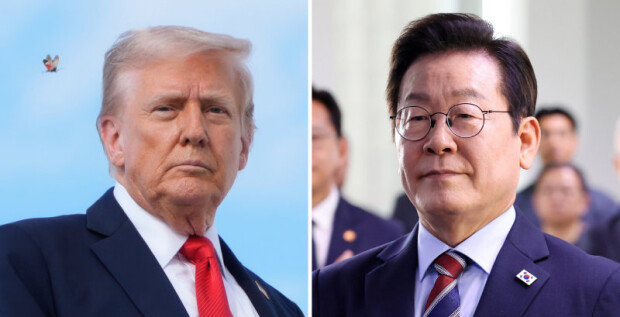
South Korea and the United States began follow-up talks on their tariff agreement, which includes a $350 billion investment fund in the United States, but failed to bridge their differences. With the fallout from the detention of Korean workers still reverberating, Seoul is reportedly preparing for the possibility that negotiations could stretch until after U.S. President Donald Trump’s expected visit to Gyeongju for the Asia-Pacific Economic Cooperation summit next month.
Industry Minister Kim Jung-kwan, who met with U.S. Commerce Secretary Howard Lutnick for follow-up consultations on the trade agreement and returned home on Sept. 14, told reporters when asked about the outcome of the talks, “Bilateral consultations are still in progress.” Lutnick, speaking on Sept. 11, a day before the Korea-U.S. industry ministers’ meeting, cautioned “Korea must either pay tariffs or accept the agreement, black or white,” and warned that if Seoul rejects U.S. demands, tariffs could be restored to 25 percent.
A government official said that the gap between the two sides remains significant. “Tariff talks are defined by each side presenting new conditions to strike an optimal balance. They are a process of fine-tuning, and completion comes when our interests are secured," Presidential spokesperson Kang Yoo-jung also told a briefing that day. "Many variables remain at this stage.”
On July 30, the two countries reached a tariff agreement under which the United States would cut reciprocal tariffs on South Korea from 25 percent to 15 percent in exchange for Seoul creating a $350 billion investment fund in the United States. But the talks have since stalled, as Washington has demanded that Seoul sign a memorandum of understanding similar to one it concluded with Japan. The U.S.-Japan MOU is said to require Tokyo to inject cash within 45 days once the United States designates an investment target, with Washington taking 90 percent of the returns after the investment is recovered.
Despite U.S. threats to reinstate tariffs, the government has decided not to rush the negotiations. With distrust in U.S.-bound investment growing among Korean companies after the detention of Korean workers in Georgia, and with domestic opinion turning increasingly negative, Seoul finds it difficult to readily accept Washington’s demands. “We cannot delay the talks indefinitely, but there are many variables,” a senior government official said. “We will make our judgment by taking into account the U.S.-China tariff negotiations and the APEC summit schedule.”
The government’s stance reflects preparations for the possibility that Korea-U.S. tariff negotiations will be prolonged, given the APEC summit in Gyeongju on Oct. 31 and the Nov. 10 deadline for U.S. tariff suspensions on China. Earlier, a White House official told CNN that preparations are underway for President Trump to visit Korea during the APEC summit, saying, “The focus of the visit will be economic cooperation, with trade, security and civil nuclear cooperation included on the agenda.”
Hoon-Sang Park tigermask@donga.com

![[사설]러-중 대놓고 北 편들기… 구멍 숭숭 ‘제재의 둑’ 아예 무너질라](https://dimg.donga.com/c/138/175/90/1/wps/NEWS/IMAGE/2026/05/01/133849639.1.jpg)



 About Dong-A Ilbo