

Families reject investigation board’s findings on Muan crash
Families reject investigation board’s findings on Muan crash
Posted July. 21, 2025 08:09,
Updated July. 21, 2025 08:09
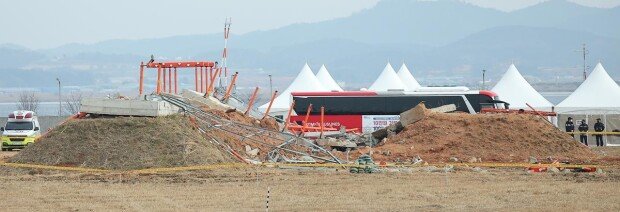
South Korea’s aviation accident authority is investigating whether the pilot of a Jeju Air flight shut down a functioning engine after a bird strike in last December’s fatal crash. However, victims’ families are opposing the findings, arguing investigators reached conclusions without providing enough evidence, leading to the cancellation of a planned briefing.
According to the Ministry of Land, Infrastructure and Transport on July 20, the Aviation and Railway Accident Investigation Board planned to release the results of a detailed joint engine investigation on July 19 at Muan International Airport. The two engines recovered from the crash site were sent in May to French manufacturer CFM International, where investigators from the U.S. National Transportation Safety Board and French aviation authorities took part in the examination. The findings could influence how responsibility is assigned among the airline, government, and other parties.
The investigation suggests that although the left engine sustained damage from a bird strike, it still produced enough power to keep flying. Authorities believe the pilot may have shut down the engine while carrying out emergency procedures.
However, victims’ families strongly opposed this conclusion, accusing the Aviation and Railway Accident Investigation Board of blaming “a dead bird and the pilot” without providing clear evidence. As a result, the detailed findings were not made public. “They should provide convincing evidence to the families, but instead they only presented conclusions and refused to share supporting data," said Kim Yu-jin, head of the Dec. 29 Muan Jeju Air crash victims’ family association. "We requested the full report by global experts, but only received a brief summary.”
The victims’ families also criticized the investigation board for being reluctant to share information. They said that when part of the communication between the control tower and the pilot was released in April, the investigation leader simply read the transcript without offering explanations or answering questions.
The board said it is releasing information in compliance with international regulations. The International Civil Aviation Organization prohibits the public release of cockpit voice recordings. “We have held more than 10 briefings for victims’ families," an official noted. "Verified documents will be fully disclosed following international guidelines.”
The disruption has prompted calls for a clearer and more reliable communication strategy instead of rushed interim announcements. Jeong Yoon-sik, a professor of aviation operations at Catholic Kwandong University, said the board should prioritize preventing future accidents over assigning legal blame. The board plans to draft its final report by April next year and release the full findings in June.
이축복 기자 bless@donga.com


![“1000만원 줄 테니 나가달라”…집주인 제안, 받아도 될까 [집과법]](https://dimg.donga.com/c/138/175/90/1/wps/NEWS/IMAGE/2026/06/19/134130634.3.jpg)
![‘월급 50만원, 아파트는 4억’ 베트남…청년들 “그냥 평생 월세 살란다”[딥다이브]](https://dimg.donga.com/c/138/175/90/1/wps/NEWS/IMAGE/2026/06/19/134141662.1.png)



 About Dong-A Ilbo