

Biological factors influence families’ patterns of child gender
Biological factors influence families’ patterns of child gender
Posted July. 21, 2025 08:08,
Updated July. 21, 2025 08:08
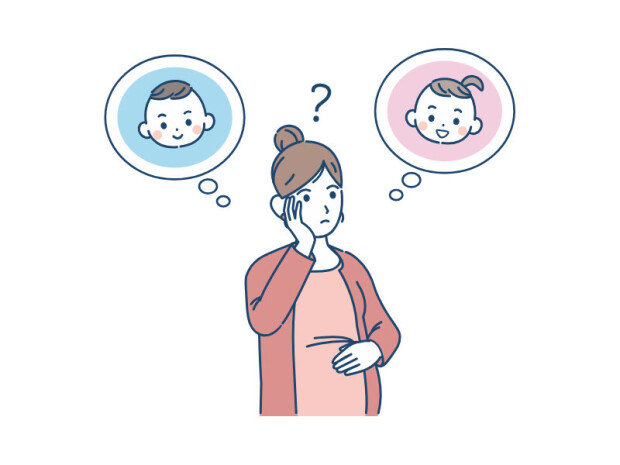
Although declining birth rates have increased the number of single-child families, cases of families having only sons or only daughters still occur. These so-called "all-son" or "all-daughter" families are not merely due to chance but result from a combination of factors including maternal age at first birth as well as genetic and biological traits, according to a new study. This means a child’s sex is not determined strictly by a 50-50 probability.
A research team from Harvard T.H. Chan School of Public Health and other institutions analyzed family records and genetic data from more than 58,000 American women and over 146,000 births spanning 1956 to 2015. Their findings were published July 18 in the international journal Science Advances.
The study revealed subtle patterns of gender bias within families. In households with three or more children, the likelihood of having children all of the same sex was higher than expected. For example, families with three sons had a 61 percent chance that the fourth child would also be a boy, while families with three daughters had a 58 percent chance the next child would be a girl. These probabilities exceed the random range of 50 to 53 percent.
This trend was more pronounced among women who had their first child after age 28. Those women were 13 percentage points more likely to have children of the same sex compared to women who had their first child before age 23. The study found no significant connection between gender patterns and factors like race, hair color, height, or blood type. To prevent bias, researchers excluded the sex of the last child in each family from the analysis, as families may continue having children until achieving a desired gender.
Genome-wide association analysis (GWAS) also revealed, for the first time, that certain maternal gene variants are linked to the likelihood of having only sons or only daughters. For instance, the NSUN6 gene (rs58090855) on chromosome 10 showed a strong association with families having daughters only.
“Our analysis confirms that child gender is not determined entirely at random," said Wang Siwen, a Harvard doctoral student involved in the research. "Biological factors may partially influence family-specific gender patterns.”
Ji-Young Jeong jjy2011@donga.com


![[단독]선관위, 결재없이 55억 써도 견책… “솜방망이 징계에 기강 해이”](https://dimg.donga.com/c/138/175/90/1/wps/NEWS/IMAGE/2026/06/19/134138827.4.jpg)



 About Dong-A Ilbo