

U.S., China agree on rare earth export framework
U.S., China agree on rare earth export framework
Posted June. 12, 2025 07:34,
Updated June. 12, 2025 07:34
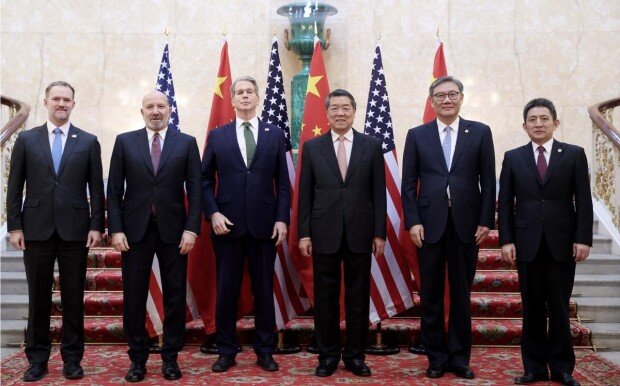
The United States and China reached an agreement on June 10 to establish a framework aimed at easing restrictions on rare earth exports, during their second round of high-level trade talks held in London.
In their first round of negotiations in Geneva last month, the two sides agreed to significantly reduce tariffs for 90 days, but clashed over rare earth exports and other contentious issues.
According to Reuters and other outlets, U.S. Commerce Secretary Howard Lutnick said the framework is intended to implement the Geneva agreement and the consensus reached during a recent phone call between the two countries’ leaders. China's Vice Minister of Commerce Li Chenggang, who led the talks as chief trade negotiator, called the discussions “deep and candid.”
Lutnick said the United States had taken various measures in response to China’s rare earth export restrictions and added, “As President Trump has said, those measures are expected to be lifted in a balanced manner.” His remarks suggest the U.S. may ease controls on exports of advanced semiconductors to China if Beijing relaxes its rare earth curbs.
The agreement is seen as an effort to prevent further deterioration in bilateral trade ties and to build momentum for future talks. However, because the framework is non-binding and key disagreements persist, observers warn it may serve only as a temporary truce.
The Trump administration continues to express concern over Chinese overproduction and dumping practices, while Beijing remains frustrated by U.S. tariffs, semiconductor export controls, and student visa policies.
Jin-Woo Shin niceshin@donga.com








 About Dong-A Ilbo