

‘Minecraft’ movie defies critics, becomes box office juggernaut
‘Minecraft’ movie defies critics, becomes box office juggernaut
Posted May. 08, 2025 08:06,
Updated May. 08, 2025 08:06
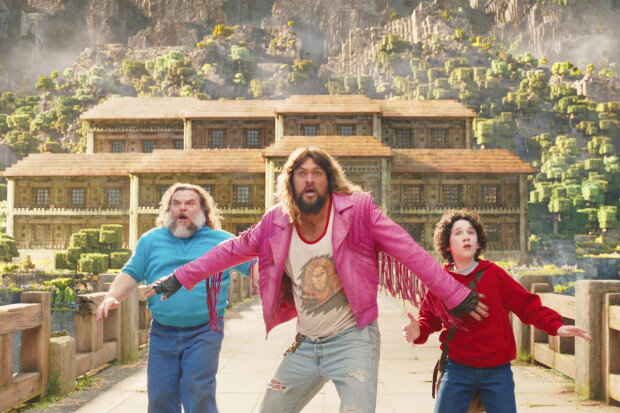
In a failing game shop covered in dust, Garrett (Jason Momoa), a washed-up champion clinging to his former glory, is suddenly swallowed up by a mysterious portal that opens before him. When he comes to, he finds himself in a strange, blocky world where even the trees, mountains, and clouds are made of cubes. There, he meets Steve (Jack Black), who arrived before him, and together they embark on a wild and absurd adventure through this bizarre new land.
The film Minecraft: The Movie is built on this simple, predictable premise. The original Minecraft, launched in 2009, won fans worldwide with its open-ended, story-free gameplay. Similarly, the movie focuses less on tight storytelling and more on spontaneous gags and laugh-out-loud moments. With its loose structure, however, the film has drawn criticism: it holds a 48 percent score on U.S. review aggregator Rotten Tomatoes, a rating often reserved for flops.
But audiences saw it differently. Despite its $150 million budget, the film has grossed an impressive $875.3 million worldwide. Jack Black’s 34-second tune, “Steve’s Lava Chicken,” even hit No. 78 on the Billboard Hot 100 — the shortest song ever to chart in the publication’s 67-year history. In South Korea, the film opened on April 26, four days earlier than scheduled, and drew 1.09 million viewers by May 6.
The success of Minecraft: The Movie is part of a growing trend of hit films based on video games. Where loosely plotted stories were once seen as a weakness, they are now proving to be an asset, giving filmmakers freedom to unleash their imagination. A new rule of success is emerging: the less constrained the narrative, the more audiences embrace the film’s freewheeling spirit.
Minecraft’s gameplay, which lets players build their own worlds without a set plot, offered the filmmakers a blank canvas to craft their universe. And the biggest driver of the movie’s success has been the viral spread of memes. Teen audiences went wild for the “Chicken Jockey” — a baby zombie character riding a chicken — and flooded social media with videos of themselves tossing popcorn and drinks during screenings. In the U.S., some even brought live chickens to theaters or set off fireworks, prompting chaos. The New York Times noted that a “crazy catchphrase” led by the Chicken Jockey is taking over multiplexes.
Upcoming game-based films like The Legend of Zelda are expected to follow this playbook, emphasizing fast-paced, meme-worthy moments that appeal to young audiences raised on short-form content such as YouTube and TikTok. “Young viewers, the main audience for game-based movies, consume them much like they do video games — focusing less on cinematic quality and more on relatable, meme-driven, youth-oriented culture. That’s the formula for success now,” film critic Lee Ji-hye noted.
이호재 기자 hoho@donga.com








 About Dong-A Ilbo