

History
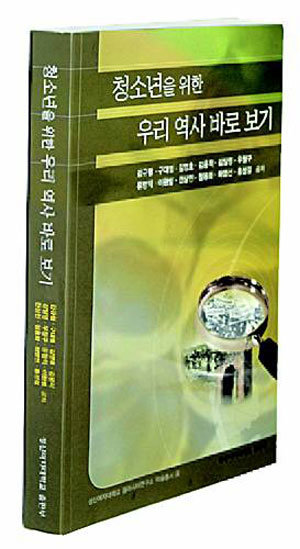
To help teach the modern and contemporary history of Korea, all 12 of the lectures contained in the 2004 Youth History Lecture written by top scholars have been published in one book: Our Youth History, by Sungshin Womens University Press.
This book includes a weekly question and answer session that took place at Dong-A Ilbo Hall from October to December 2004, sponsored jointly by the Korean Association of International Studies and Dong-A Ilbo.
The subjects debated in the book include the causes of the Korean empires ruin, the struggles during Japanese colonial rule, the issue of ideology strife in a land of liberty, the split of the two Koreas and the Korean war, Lee Seung-man and Park Chung-hees achievements, and comparisons of Korea past and present.
All are daunting topics. But lecturers Yoo Young-ik (Yonsei University), Ha Young-sun (Seoul National University), Kim Young-ho (Sungshin Womens University), Kim Il-young (Sungkwunkwan University), and Lee Wan-beom (The Academy of Korean Studies) have not only managed to capture the essence of recent research and studies not found in textbooks, but theyve crafted their writing for a teenage audience.
The core contents are: the fall of the Korean empire was due to the ignorance of leaders on state affairs; as much as the Japanese colonial times was about foreign powers, domestic media mattered; In the liberty land both the American and Soviet soldiers were all occupational troops and the Trusteeship ran contrary to the wishes of Korea; more than a dictator, Lee Seung-man helped set the foundation for this country; the Korean war was sparked by the North invading the South, yet at the same time was an international war enacted by the Soviet Union; the 1950s was not only a time of corruption but also paved the road for the economic miracle of the 1960s; that Park Chung-hees development strategy became an unprecedented success required his leadership; the moral of modern and contemporary Korea is not to disintegrate it, but to build on it for the future.
The book was not written in scholarly terminology, but captured the words as they were spoken, making it an easy read. The question-and-answer sessions are also as they were, a debate between the greatest scholars in Korea and ordinary civilians.
Chae-Hyun Kwon confetti@donga.com




 About Dong-A Ilbo