

The future fund needs fiscal discipline
The future fund needs fiscal discipline
Posted October. 09, 2026 08:32,
Updated October. 09, 2026 08:32
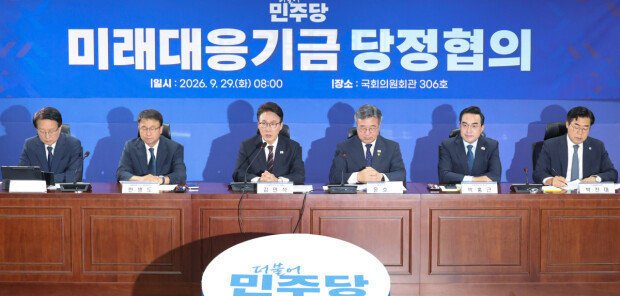
The government says it wants to put the tax windfall from the semiconductor boom to work for future generations. It has set up a 162 trillion won Future Response Fund and plans to spend about 45 trillion won on 140 programs next year. But a review of those plans shows that 14 programs, or one in 10, involve cash payments. Together, they account for roughly one-fifth of the fund’s planned spending. The government calls the fund an investment in the future. It is difficult to see how one-off cash payments fit that description.
Government audit materials submitted to the National Assembly show that the 14 cash-based programs will receive a combined 9.622 trillion won next year. Some are existing programs that have been shifted from regular accounts or other funds into the Future Response Fund’s categories for youth, growth engines, regional development, and education and talent. Others have simply received much larger allocations. The rural and fishing community basic income program, for instance, has been expanded to 1.1657 trillion won, five times this year’s budget. The Youth Culture and Arts Pass, which gives people ages 19 to 34 money to spend on cultural activities, has jumped to 792.5 billion won, 22 times its current budget.
The fund also contains plenty of spending that is not technically cash support but is difficult to square with its purpose. A program for “public institution reform” includes 100 billion won in employee incentives. Another 5.6 billion won is earmarked to secure official residences for ministers and vice ministers as part of a plan to move government ministries and agencies outside Seoul. Such spending is a far cry from the government’s stated goal of reversing the decline in potential growth through productive investment in areas such as artificial intelligence, rather than spending that simply fuels consumption. The Future Response Fund Establishment Act proposed by the government would make matters worse by allowing spending priorities to be changed without parliamentary review for up to 30% of expenditures in major categories. Because the fund would face less parliamentary scrutiny than the regular budget, the government is inviting criticism that it could become a source of discretionary spending.
Cash programs are particularly difficult to unwind once they are in place. Using the unusually large tax haul from the semiconductor boom to expand such programs could leave taxpayers facing a much bigger burden when revenue returns to normal levels. The money would be better used to reduce government debt and safeguard fiscal stability. Some forecasts now suggest that the fund could grow beyond 200 trillion won as tax revenue exceeds expectations by an even wider margin. The National Assembly should use its review of the legislation to rein in the government’s discretion and put safeguards in place against wasteful spending.

![[사설]정동영 이종석 교체해야](https://dimg.donga.com/c/138/175/90/1/wps/NEWS/IMAGE/2026/10/09/134816883.1.jpg)
![[단독]美 “韓, 정보-방첩 수십년 동맹기준 준수해야”](https://dimg.donga.com/c/138/175/90/1/wps/NEWS/IMAGE/2026/10/09/134816945.1.jpg)

![‘10의 법칙’을 기억하라… 닮은 듯 다른 상속-증여 절세법[은퇴 레시피]](https://dimg.donga.com/c/138/175/90/1/wps/NEWS/IMAGE/2026/10/09/134816940.1.png)


 About Dong-A Ilbo