

“A Technological Solution for a Sleepless Society” The Evolution of db beats’ Sleep Technology
“A Technological Solution for a Sleepless Society” The Evolution of db beats’ Sleep Technology
Posted September. 14, 2026 14:25,
Updated September. 14, 2026 14:28
- Emerging from LG's internal venture brid.zzz, sleep tech startup db beats redesigned its hardware to create 'For Me Buds'—an ultra-small, ergonomic earable designed for comfortable side-sleeping without ear pressure.
- Unlike static white noise apps or basic trackers, For Me Buds use an advanced PPG sensor to track heart rate variability (HRV) and inversely estimate brainwaves, delivering Dynamic Binaural Beats via AI for real-time closed-loop neuromodulation.
- Backed by clinical trials showing reductions in sleep onset latency and stress hormones, db beats is now advancing to its 2nd-generation model featuring on-device algorithms, purpose-separated apps, and a privacy-first local storage policy.
Humans spend a third of their lives sleeping. However, this is often disrupted by various factors, including work-related stress, anxiety, and smartphone screens that we cannot seem to let go of. Sleep is no longer something that comes naturally; it has become a subject that needs to be managed. According to a sleep tech market analysis report by market research firm Mordor Intelligence, as of 2024, 852 million people—representing 16.2% of the global adult population—experienced insomnia or related symptoms. This is why the sleep tech market, targeting people around the world who fail to get a good night's sleep, is on a growth trajectory.
Market research firm Grand View Research projected that the sleep tech market will grow from approximately $20 billion in 2023 to $47 billion by 2030. When adding sleep tracking devices, it forecast a growth from $26.6 billion in 2023 to $58.2 billion by 2030. Sleep has transcended the personal realm and crossed over into an industrial domain where data and algorithms intervene.
While the market is growing, the vast majority of sleep devices on the market are concentrated on measurement and management. Brand products leading the wearable industry typically combine accelerometers, photoplethysmography sensors, and skin temperature sensors to record heart rates and physical movements overnight, providing reports in return.
Attempts to bridge the limitations of mere measurement and management have also emerged. A representative example is Binaural Beats, an auditory phenomenon where different frequency sounds are output to human ears, and the brain perceives the frequency difference as a pulse. However, because it relied on pre-prepared content, it faced the limitation of varying effectiveness from person to person. Technology that directly measures brainwaves to intervene in sleep also appeared. Yet, it struggled with commercialization due to bulky equipment or poor wearability.
db beats garnered market attention with For Me Buds, an earable (smart device worn in the ear) device that reads brainwaves and Heart Rate Variability (HRV) in real-time, instantly playing sounds tailored to that state to assist with sleep and mental care. What is the driving force behind db beats' steady growth in the sleep tech market?
db beats, Betting Everything on Sleep Management Technology
db beats grew alongside the sleep tech market. Its starting point was the smart sleep care device brid.zzz, which first debuted under an LG Electronics Company in Company (CIC) system. At the time, brid.zzz captured the industry's attention with the idea of synchronizing human brainwaves through sound to aid sleep. It received high praise for detecting sleep brainwaves and playing customized sounds.
brid.zzz featured a structure that measured brainwaves in real-time using an EEG sensor and learned sleep stages through an Adaptive Stimulus Algorithm. By directly measuring brainwaves to determine sleep stages, brid.zzz boasted the advantage of higher accuracy compared to standard smartwatches that estimate sleep stages based solely on motion recognition.
While brid.zzz, db beats' first attempt, proved its potential, it also presented homework. A sleep aid device must withstand a physical environment different from wireless earphones worn while awake. People do not just stay in a supine position when they sleep; they constantly toss and turn, burying their heads in pillows or rolling onto their sides repeatedly. The subtle pressure or foreign body sensation pressing against the auricle during this process actually irritated the nerves, acting as a factor that disrupted deep sleep.
Based on the real-world data obtained during this process, db beats refined its product design from square one. For Me Buds, introduced after spinning off from LG Electronics and reorganizing the team, is the result of efforts to resolve the difficulties experienced with brid.zzz.
For Me Buds applied an ultra-small ergonomic design that adheres completely to the ear canal without protruding outside the auricle. Even when sleeping on one's side, the earphone size was minimized as much as possible so that virtually no pressure is applied between the pillow and the ear.
By minimizing the hardware's weight and using skin-friendly medical-grade silicone, the discomfort of wearing it was also alleviated. It boosted physical sound isolation (passive noise cancellation) performance that naturally blocks the inside of the ear, filtering out snoring or external noise while lowering the pressure applied to the ear, ensuring comfort is maintained throughout sleep. Technology is important, but this was an evolution heavily focused on creating an environment that does not disturb sleep.
Why Does db beats' Sleep Management Technology Stand Out?
db beats utilizes Dynamic Binaural Beats, which induces brainwaves through sound, and a PPG-based tracking algorithm that estimates brainwaves based on Heart Rate Variability (HRV) analysis. It is a structure focused on analyzing brainwaves in real-time using the correlation of biosignals and managing sleep.
Binaural Beats itself is not a new concept. This is because it is a technique that uses an auditory optical illusion where, when sounds of minutely different frequencies are played into the left and right ears, the brain perceives a frequency equal to the difference. However, db beats' Dynamic Binaural Beats took a different path in that it reflects real-time data instead of fixed values.
If general Binaural Beats unilaterally plays a pre-set frequency, Dynamic Binaural Beats reflects the user's real-time biosignals to continuously alter the frequency and pattern on the fly. It relaxes the brain before falling asleep, and once entering deep sleep, the very nature of the stimulus changes toward maintaining that state.
Artificial Intelligence (AI) also assists with optimal sleep. For For Me Buds, AI selects the optimal track from a functional sound library. It is designed to analyze the user's condition and choose customized sounds fitting the sleep stage. This is a fundamentally different approach from existing white noise apps that repeatedly play a single piece of content.
The reason For Me Buds could reflect brainwave status in real-time is the PPG sensor. db beats discovered the correlation between brainwaves and pulse waves and developed an algorithm that inversely tracks brainwaves using only the heart rate and heart rate variability measured inside the ear. Rather than directly measuring the electrical signals flowing in the brain, it analyzes the minute change patterns in the blood flow signals created by the heart to gauge what sleep stage the user is currently in.
This is because the autonomic nervous system operates differently at each sleep stage, and those traces remain intact in the heart rate variability. The ultra-small PPG sensor equipped in For Me Buds is optimized to precisely measure heart rates from 64 to 256 beats per minute. On top of this, a motion sensor that detects the user's posture and movement, and an infrared (IR) sensor that determines whether the device is being worn, were also applied. The signals collected through various sensors ultimately lead to the Dynamic Binaural Beats output.
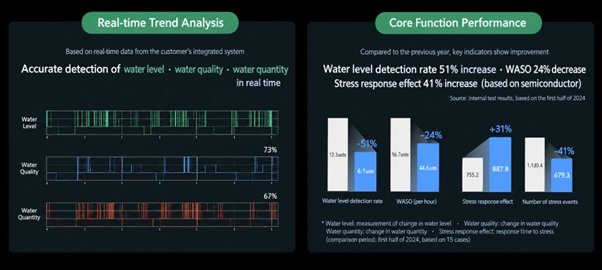
db beats also poured efforts into securing technological reliability. According to db beats data, in a trial involving 15 subjects conducted at Seoul National University Bundang Hospital(SNUBH), sleep onset latency decreased by 51% from 12.5 minutes to 6.1 minutes, and in a trial with 54 subjects at Ajou University Hospital, Wake After Sleep Onset (WASO) was found to have decreased by 36.5%. Total sleep time and sleep efficiency also showed improvement. In a trial conducted with Korea University, the stress hormone cortisol level was analyzed to have dropped by 32%.
db beats' For Me Buds grasps in real-time whether the user is still unable to sleep and in a state of tension, or whether their breathing has stabilized and they have entered light sleep. Upon confirming entry into sleep, it switches the sound pattern to deep sleep mode, and once completely settled into deep sleep, it gradually lowers the volume to adjust so the sound is not consciously perceived. A real-time Closed-loop Neuromodulation system that reads biosignals and alters sounds accordingly is precisely the unique differentiator of db beats that existing sleep sound apps or wearable bands cannot imitate.
db beats' Sleep Management Technology Evolves
db beats is now preparing to leap from the stage of assisting sleep onset into a next-generation solution that encompasses the entire sleep cycle and daily mental care. The goal is to expand into a 'Mental Performance Platform' that tunes brainwaves to an optimal state. The product set to be introduced to achieve this goal is the 2nd generation For Me Buds. The company is accelerating development with the aim of creating a sleep management solution equipped with high-precision hardware and intelligent software.
The biggest change is the on-device algorithm. The 1st generation consumed a lot of battery as it sent the raw data collected by sensors to a smartphone app for computation, and it also revealed limitations in interconnectivity with external devices. The 2nd generation altered the structure so that biosignal analysis takes place within the earphones. Not only does battery efficiency improve, but the path to flexibly connecting with external devices also opens up. The company also put great effort into improving wearability, such as evenly refining the surface touching the ear and adopting a structure where the inside pushes in when pressed to reduce pressure.
The app strategy is changing as well. Instead of a method that crams all wellness features into a single app, it opted for a separated structure by purpose. A user looking to focus on sleep downloads a streamlined sleep-dedicated app, while a user needing meditation or concentration downloads a lightweight app for that specific theme. Based on user analysis indicating discomfort with biometric information being transmitted to external cloud servers, a privacy-first policy that stores and processes all personal information exclusively on the smartphone's internal storage has also been introduced.
db beats' attempt to overcome sleepless nights through natural sounds and brainwave synchronization technology shows the direction sleep tech should head. It wasn't the fastest route, but the technological experience accumulated thus far is expected to become the foundation leading to market differentiation.
By Hyung-seok Kang (redbk@itdonga.com)
- Unlike static white noise apps or basic trackers, For Me Buds use an advanced PPG sensor to track heart rate variability (HRV) and inversely estimate brainwaves, delivering Dynamic Binaural Beats via AI for real-time closed-loop neuromodulation.
- Backed by clinical trials showing reductions in sleep onset latency and stress hormones, db beats is now advancing to its 2nd-generation model featuring on-device algorithms, purpose-separated apps, and a privacy-first local storage policy.
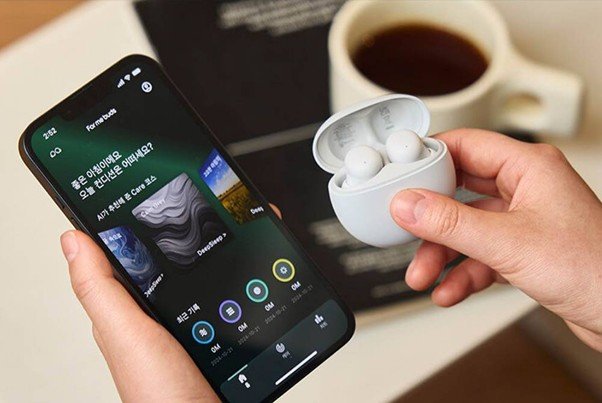
Sleep management earphones For Me Buds/source=db beats
Humans spend a third of their lives sleeping. However, this is often disrupted by various factors, including work-related stress, anxiety, and smartphone screens that we cannot seem to let go of. Sleep is no longer something that comes naturally; it has become a subject that needs to be managed. According to a sleep tech market analysis report by market research firm Mordor Intelligence, as of 2024, 852 million people—representing 16.2% of the global adult population—experienced insomnia or related symptoms. This is why the sleep tech market, targeting people around the world who fail to get a good night's sleep, is on a growth trajectory.
Market research firm Grand View Research projected that the sleep tech market will grow from approximately $20 billion in 2023 to $47 billion by 2030. When adding sleep tracking devices, it forecast a growth from $26.6 billion in 2023 to $58.2 billion by 2030. Sleep has transcended the personal realm and crossed over into an industrial domain where data and algorithms intervene.
While the market is growing, the vast majority of sleep devices on the market are concentrated on measurement and management. Brand products leading the wearable industry typically combine accelerometers, photoplethysmography sensors, and skin temperature sensors to record heart rates and physical movements overnight, providing reports in return.
Attempts to bridge the limitations of mere measurement and management have also emerged. A representative example is Binaural Beats, an auditory phenomenon where different frequency sounds are output to human ears, and the brain perceives the frequency difference as a pulse. However, because it relied on pre-prepared content, it faced the limitation of varying effectiveness from person to person. Technology that directly measures brainwaves to intervene in sleep also appeared. Yet, it struggled with commercialization due to bulky equipment or poor wearability.
db beats garnered market attention with For Me Buds, an earable (smart device worn in the ear) device that reads brainwaves and Heart Rate Variability (HRV) in real-time, instantly playing sounds tailored to that state to assist with sleep and mental care. What is the driving force behind db beats' steady growth in the sleep tech market?
db beats, Betting Everything on Sleep Management Technology
db beats grew alongside the sleep tech market. Its starting point was the smart sleep care device brid.zzz, which first debuted under an LG Electronics Company in Company (CIC) system. At the time, brid.zzz captured the industry's attention with the idea of synchronizing human brainwaves through sound to aid sleep. It received high praise for detecting sleep brainwaves and playing customized sounds.
brid.zzz featured a structure that measured brainwaves in real-time using an EEG sensor and learned sleep stages through an Adaptive Stimulus Algorithm. By directly measuring brainwaves to determine sleep stages, brid.zzz boasted the advantage of higher accuracy compared to standard smartwatches that estimate sleep stages based solely on motion recognition.
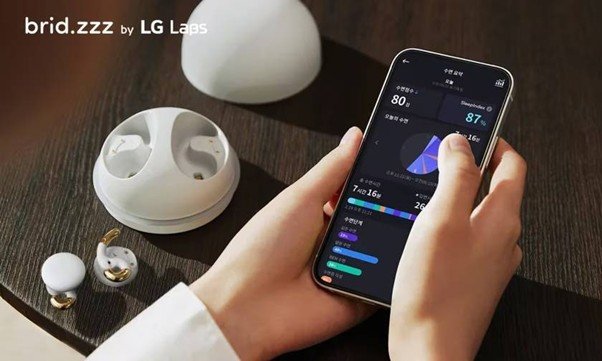
brid.zzz, developed during db beats' time as an LG Electronics internal venture/source=LG Electronics
While brid.zzz, db beats' first attempt, proved its potential, it also presented homework. A sleep aid device must withstand a physical environment different from wireless earphones worn while awake. People do not just stay in a supine position when they sleep; they constantly toss and turn, burying their heads in pillows or rolling onto their sides repeatedly. The subtle pressure or foreign body sensation pressing against the auricle during this process actually irritated the nerves, acting as a factor that disrupted deep sleep.
Based on the real-world data obtained during this process, db beats refined its product design from square one. For Me Buds, introduced after spinning off from LG Electronics and reorganizing the team, is the result of efforts to resolve the difficulties experienced with brid.zzz.
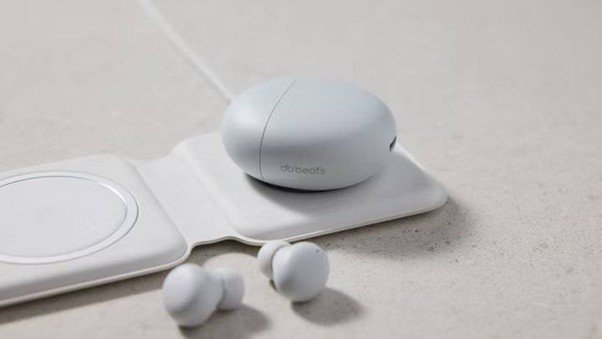
For Me Buds applied an ultra-small ergonomic design that adheres completely to the ear canal without protruding outside the auricle. Even when sleeping on one's side, the earphone size was minimized as much as possible so that virtually no pressure is applied between the pillow and the ear.
db beats' For Me Buds, which enhanced perfection by improving the shortcomings of brid.zzz/source=db beats
By minimizing the hardware's weight and using skin-friendly medical-grade silicone, the discomfort of wearing it was also alleviated. It boosted physical sound isolation (passive noise cancellation) performance that naturally blocks the inside of the ear, filtering out snoring or external noise while lowering the pressure applied to the ear, ensuring comfort is maintained throughout sleep. Technology is important, but this was an evolution heavily focused on creating an environment that does not disturb sleep.
Why Does db beats' Sleep Management Technology Stand Out?
db beats utilizes Dynamic Binaural Beats, which induces brainwaves through sound, and a PPG-based tracking algorithm that estimates brainwaves based on Heart Rate Variability (HRV) analysis. It is a structure focused on analyzing brainwaves in real-time using the correlation of biosignals and managing sleep.
Binaural Beats itself is not a new concept. This is because it is a technique that uses an auditory optical illusion where, when sounds of minutely different frequencies are played into the left and right ears, the brain perceives a frequency equal to the difference. However, db beats' Dynamic Binaural Beats took a different path in that it reflects real-time data instead of fixed values.
If general Binaural Beats unilaterally plays a pre-set frequency, Dynamic Binaural Beats reflects the user's real-time biosignals to continuously alter the frequency and pattern on the fly. It relaxes the brain before falling asleep, and once entering deep sleep, the very nature of the stimulus changes toward maintaining that state.
Artificial Intelligence (AI) also assists with optimal sleep. For For Me Buds, AI selects the optimal track from a functional sound library. It is designed to analyze the user's condition and choose customized sounds fitting the sleep stage. This is a fundamentally different approach from existing white noise apps that repeatedly play a single piece of content.
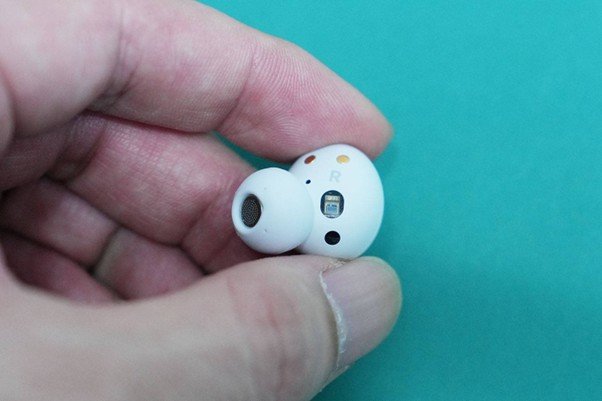
Equipped with a photoplethysmography sensor on the earbud to track the correlation between pulse waves and brainwaves/source=IT DongA
The reason For Me Buds could reflect brainwave status in real-time is the PPG sensor. db beats discovered the correlation between brainwaves and pulse waves and developed an algorithm that inversely tracks brainwaves using only the heart rate and heart rate variability measured inside the ear. Rather than directly measuring the electrical signals flowing in the brain, it analyzes the minute change patterns in the blood flow signals created by the heart to gauge what sleep stage the user is currently in.
This is because the autonomic nervous system operates differently at each sleep stage, and those traces remain intact in the heart rate variability. The ultra-small PPG sensor equipped in For Me Buds is optimized to precisely measure heart rates from 64 to 256 beats per minute. On top of this, a motion sensor that detects the user's posture and movement, and an infrared (IR) sensor that determines whether the device is being worn, were also applied. The signals collected through various sensors ultimately lead to the Dynamic Binaural Beats output.
db beats focused on securing the reliability of its sleep management technology through clinical trials/source=db beats
db beats also poured efforts into securing technological reliability. According to db beats data, in a trial involving 15 subjects conducted at Seoul National University Bundang Hospital(SNUBH), sleep onset latency decreased by 51% from 12.5 minutes to 6.1 minutes, and in a trial with 54 subjects at Ajou University Hospital, Wake After Sleep Onset (WASO) was found to have decreased by 36.5%. Total sleep time and sleep efficiency also showed improvement. In a trial conducted with Korea University, the stress hormone cortisol level was analyzed to have dropped by 32%.
db beats' For Me Buds grasps in real-time whether the user is still unable to sleep and in a state of tension, or whether their breathing has stabilized and they have entered light sleep. Upon confirming entry into sleep, it switches the sound pattern to deep sleep mode, and once completely settled into deep sleep, it gradually lowers the volume to adjust so the sound is not consciously perceived. A real-time Closed-loop Neuromodulation system that reads biosignals and alters sounds accordingly is precisely the unique differentiator of db beats that existing sleep sound apps or wearable bands cannot imitate.
db beats' Sleep Management Technology Evolves
db beats is now preparing to leap from the stage of assisting sleep onset into a next-generation solution that encompasses the entire sleep cycle and daily mental care. The goal is to expand into a 'Mental Performance Platform' that tunes brainwaves to an optimal state. The product set to be introduced to achieve this goal is the 2nd generation For Me Buds. The company is accelerating development with the aim of creating a sleep management solution equipped with high-precision hardware and intelligent software.
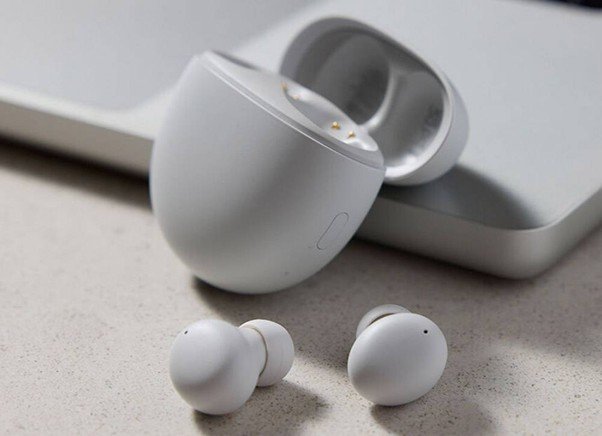
The biggest change is the on-device algorithm. The 1st generation consumed a lot of battery as it sent the raw data collected by sensors to a smartphone app for computation, and it also revealed limitations in interconnectivity with external devices. The 2nd generation altered the structure so that biosignal analysis takes place within the earphones. Not only does battery efficiency improve, but the path to flexibly connecting with external devices also opens up. The company also put great effort into improving wearability, such as evenly refining the surface touching the ear and adopting a structure where the inside pushes in when pressed to reduce pressure.
db beats’ For Me Buds/source=db beats
The app strategy is changing as well. Instead of a method that crams all wellness features into a single app, it opted for a separated structure by purpose. A user looking to focus on sleep downloads a streamlined sleep-dedicated app, while a user needing meditation or concentration downloads a lightweight app for that specific theme. Based on user analysis indicating discomfort with biometric information being transmitted to external cloud servers, a privacy-first policy that stores and processes all personal information exclusively on the smartphone's internal storage has also been introduced.
db beats' attempt to overcome sleepless nights through natural sounds and brainwave synchronization technology shows the direction sleep tech should head. It wasn't the fastest route, but the technological experience accumulated thus far is expected to become the foundation leading to market differentiation.
By Hyung-seok Kang (redbk@itdonga.com)








 About Dong-A Ilbo