

Houthi attacks fuel fears of wider conflict
Houthi attacks fuel fears of wider conflict
Posted August. 13, 2026 08:30,
Updated August. 13, 2026 08:30
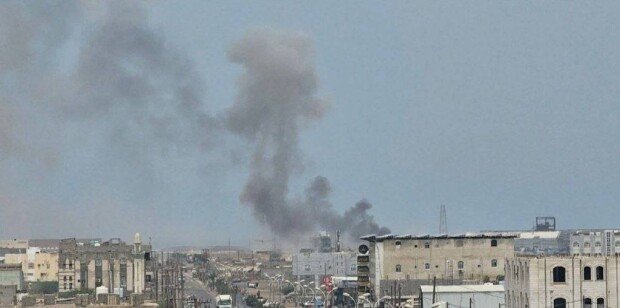
Yemen’s Iran-backed Houthi rebels expanded their attacks in the Red Sea on Tuesday, targeting vessels of all nationalities except those from Saudi Arabia. The same day, the United States struck a Panamanian-flagged vessel in the Strait of Hormuz for violating the U.S. maritime blockade of Iran. With tensions escalating in both waterways at once, fears are mounting that the conflict could spill into a broader confrontation.
The Houthis fired three ballistic missiles at a small cargo ship owned by an Egyptian company in the Bab el-Mandeb Strait, killing six people, including crew members. They also launched a second attack on rescuers who had been sent to help the burning vessel. The Houthis had previously concentrated their attacks on Saudi ships and oil facilities supporting Yemen’s government. Their decision to target non-Saudi vessels has raised concerns that the Red Sea, an alternative route for ships unable to use the Strait of Hormuz, could also be cut off. Shipping data provider Kpler said the average number of vessels passing through the Bab el-Mandeb has fallen to 32 a day from 50 before the Houthi attacks.
The escalation came as U.S. Central Command said it had used an MH-60 helicopter to fire two Hellfire air-to-ground missiles at a Panamanian-flagged vessel that violated the U.S. blockade of Iran, disabling the ship. Central Command said it had directed 55 commercial vessels that attempted to breach the blockade to use alternative routes, disabled three vessels that failed to comply and boarded two others for inspection.
For now, Washington is putting the emphasis on economic pressure against Iran. U.S. President Donald Trump said in an interview Tuesday with Real America’s Voice that Iran would fail even if the United States simply left it alone. He said Iran was suffering severe economic hardship, with inflation reaching 300% and its currency plunging in value. “We control their money,” Trump said. “I’m their banker,” he added, saying the United States has the upper hand in the economic pressure campaign.
Meanwhile, Mohsen Rezaei, the newly appointed secretary of Iran’s Supreme National Security Council, said Iran would not reopen the Strait of Hormuz unless the United States ends the war and unfreezes Iranian funds. U.S. intelligence agencies believe Iran has made control of the Strait of Hormuz a higher strategic priority than its nuclear program, NBC reported.
Keun-Hyung Yoo noel@donga.com

![[단독]美, ‘北해킹 대응’ 한미일 회의서 국정원 뺐다](https://dimg.donga.com/c/138/175/90/1/wps/NEWS/IMAGE/2026/10/08/134806546.1.jpg)





 About Dong-A Ilbo